Standard sign holders fail in cold storage for three predictable reasons: the pressure-sensitive adhesive loses tack below 40°F, rigid PVC and polypropylene become brittle at freezing temperatures, and condensation forms an invisible film that blocks the adhesive from bonding. None of these failures are random. They follow from how the holder is built and how cold air, moisture, and thermal cycling interact with those materials.
Key Takeaways
- General-purpose pressure-sensitive adhesives become firm and lose initial tack below 40°F (4°C).
- PVC and polypropylene are brittle below freezing; PETG and polycarbonate retain impact resistance at low temperatures.
- Condensation and frost create a separating layer that prevents the adhesive from wetting out.
- Application temperature and service temperature are different ratings.
- A holder rated for -40°F service may still require above-freezing application.
- Edge lift is the first visible sign of failure because the edges see the most condensation and thermal stress.
Sign Holder Adhesive Failure Below 40°F
Cold Temperatures Make Standard Pressure-Sensitive Adhesives Firm and Brittle
Pressure-sensitive adhesives bond by flowing into microscopic surface irregularities and making intimate contact. When the temperature drops, the adhesive becomes less flexible and less able to flow. Below roughly 40°F, many general-purpose adhesives become firm or brittle, and initial tack drops sharply. The holder may still feel attached when pressed, but the bond has not formed at the interface.
This is why a sign holder that holds perfectly on a room-temperature shelf can lift within hours on a refrigerated case. The adhesive was never formulated to stay tacky at that temperature. Freezer-grade adhesives are built to remain flexible and bond on damp or frosted surfaces, but a standard holder does not carry that formulation.
The “Freeze-Shock” Effect When Labels Are Applied Cold or Moved Straight into a Freezer
Pressure-sensitive adhesives need dwell time to build final bond strength, often several hours to around 24 hours depending on the adhesive and temperature. If a sign holder is applied at room temperature and moved into a freezer shortly afterward, the adhesive has not finished wetting out. Cold interrupts the bonding process, and the holder may lift at the edges once the surface contracts.
The same problem occurs when a holder is applied directly to a cold surface. The adhesive cannot flow, and the bond never develops full strength. In both cases, the failure looks like bad adhesive, but the real cause is that the bond was never given a chance to form.
Sign Holder Material Brittleness in Freezing Conditions

PVC and Polypropylene Lose Impact Strength Below Freezing
The holder body is the second failure point. PVC and polypropylene are both brittle at temperatures below freezing. A holder made from these materials may survive installation, but it becomes vulnerable to cracking when a cart, a product, or a door strikes it. The crack often starts at the mounting point or at the edge of the window, where stress concentrates.
Polypropylene transitions between roughly -20°C and -5°C, becoming noticeably stiffer and more crack-prone in cold weather. Standard PVC functions down to about -20°C but is not suited for extreme sub-zero applications. For a walk-in freezer or a blast chiller, neither material is the right specification.
Cracking at the Mounting Point and Window Under Thermal Cycling
Thermal cycling adds a second stress. Every time a cooler door opens, the holder experiences a rapid temperature change. The holder body expands and contracts at a different rate from the surface it is mounted on. Over hundreds of cycles, the mounting point and the window edge become the first places to crack or craze. A clear window that fogs or cracks makes the sign unreadable even if the holder is still attached.
Condensation and Frost Attack on Sign Holder Edges
The Invisible Moisture Film That Blocks Adhesive Wet-Out
Cold surfaces attract moisture. A surface that looks dry can carry a microscopic film of water or frost within seconds of exposure to warm, humid air. That film sits between the adhesive and the substrate, so the holder bonds to the water rather than to the shelf or door. The bond is weak from the start and fails as soon as the water evaporates or freezes.
This is why cleaning and drying the surface before application is not optional in cold storage. Even a small amount of condensation can prevent the adhesive from making contact with the substrate.
Why Edges Lift First Every Time a Cooler Door Opens
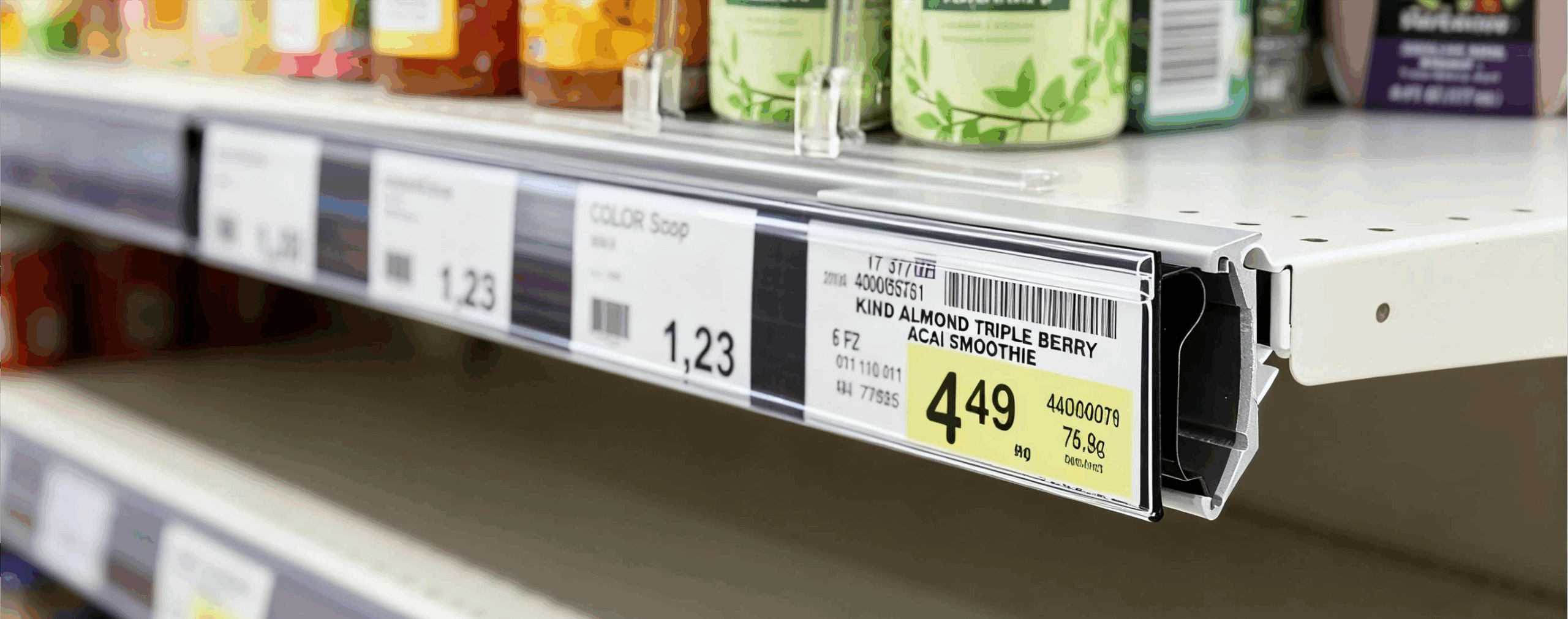
The edges of a sign holder are the most exposed part. They see the first contact with warm air, the first condensation, and the first thermal contraction. A marginal adhesive may hold in the center while the edges lift. Once an edge lifts, moisture and frost can migrate under the holder, and the failure accelerates. This is the classic cold-storage failure pattern: the holder looks attached at a glance, but the corners are already free.
How to Specify a Sign Holder for Cold Storage
Cold-Rated Adhesive vs. Standard Adhesive: Application Temperature vs. Service Temperature
The most common specification error is treating a service-temperature rating as an application-temperature rating. A holder may carry a service range down to -40°C, but that does not mean the adhesive can be applied at that temperature. A wide service range says the bond will survive cold storage after it has formed. It says nothing about whether the adhesive can wet out on a cold surface.
When selecting an adhesive sign holder for cold storage, confirm two numbers separately: the minimum application temperature and the service temperature range. If the holder must be applied inside the cold area, the application rating is the deciding number.
PETG or Polycarbonate for Impact Resistance; PP or Vinyl for Flexible Retention
For the holder body, PETG and polycarbonate have low brittleness temperatures and retain impact resistance better than standard PVC or polypropylene. PETG offers clarity and toughness at a moderate cost; polycarbonate is the more impact-resistant option for freezer doors and high-traffic coolers.
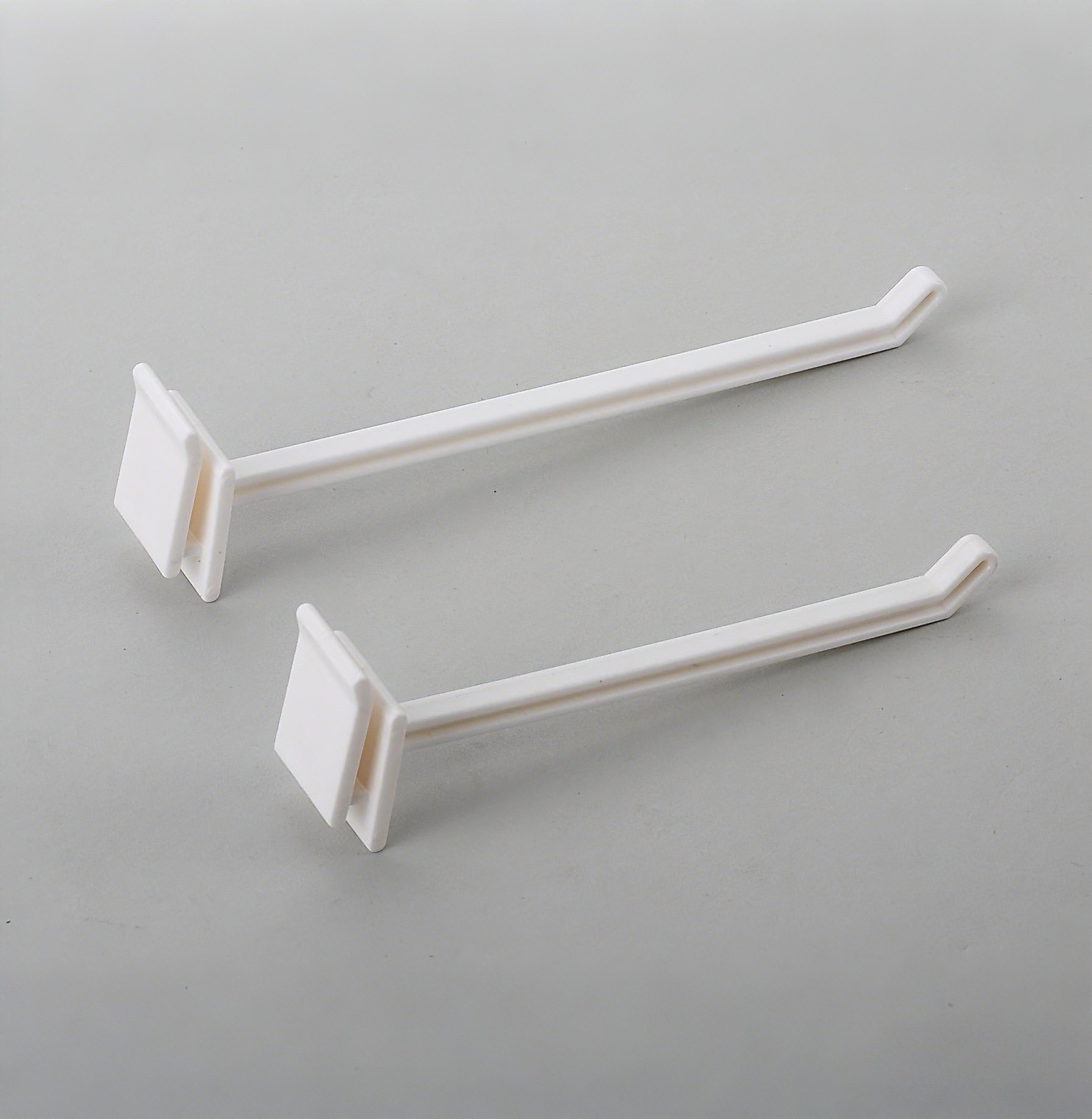
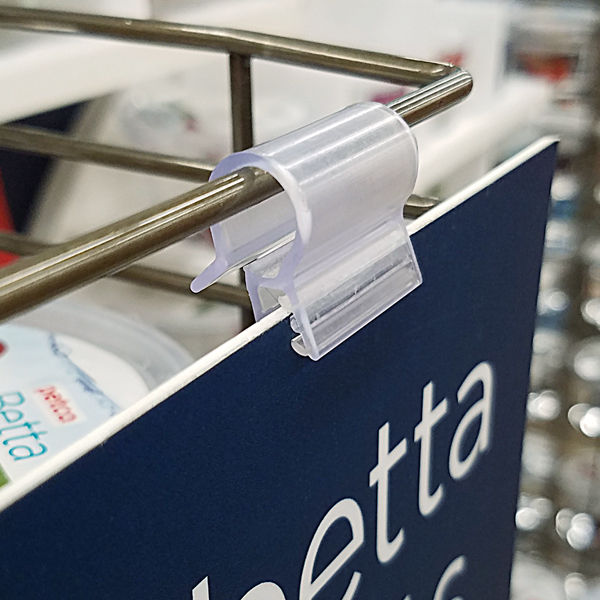
If the holder is a clip-on or gripper sign holder rather than an adhesive format, the material still matters, but the retention mechanism is mechanical rather than chemical. A gripper avoids the adhesive failure mode entirely, which is why it is often the more reliable choice on curved glass or on surfaces where condensation is unavoidable.
FAQ
Can standard sign holders be used in a freezer if the sign is light?
A light sign reduces the peel load, but it does not fix the adhesive. A standard pressure-sensitive adhesive below 40°F may never build enough tack to hold even a light card. The holder may stay in place for a few hours or days, then lift at the edges.
Does cold-rated adhesive work on a wet or frosted surface?
Not all cold-rated adhesives are wet-surface adhesives. Some freezer-grade adhesives bond to damp surfaces, but others still require a dry surface for application. Confirm the surface condition rating before specifying a holder for a cooler that cycles between wet and frozen.
What sign holder material is best for a walk-in freezer?
PETG or polycarbonate for the body, paired with a cold-rated adhesive if the format is adhesive-backed. If the holder can be mounted mechanically, a gripper format avoids the adhesive bond entirely and eliminates the most common failure mode. IDmate’s sign holders range includes adhesive and gripper formats; the correct choice depends on the surface, the temperature, and whether the holder will be applied warm or cold.