A self-adhesive label holder and a magnetic label holder solve the same problem in different ways: one bonds to the surface, the other clings to steel. The choice comes down to two questions. First, can the surface hold a magnet? Second, how often will the label need to move? Everything else — cost, appearance, installation speed — follows from those two answers.
Key Takeaways
- Magnetic label holders only work on ferrous steel surfaces. Self-adhesive holders work on plastic, wood, glass, and coated wire.
- Self-adhesive holders are cheaper per unit and suit locations that rarely change.
- Magnetic holders cost more upfront but pay back when more than roughly 20% of locations change per year.
- Relocation frequency, not holder quality, is the main driver of long-term cost.
- IDmate supplies both formats, so the choice can be made per application rather than per catalog.
Self-Adhesive vs Magnetic Label Holders: The Surface Test Comes First
Magnetic Label Holders Need a Ferrous Steel Surface
A magnetic holder is only as good as the surface it sits on. It needs ferrous steel — shelving uprights, steel beams, metal cabinets, file drawers, tool cabinets, and steel racking. On a flat steel surface, the holder can be repositioned in seconds without adhesive, tools, or residue.
On any other surface, the magnetic option is not a weak choice. It is the wrong choice. A magnet will not cling to plastic bins, wooden shelves, aluminum extrusions, coated wire racks, or glass. No amount of magnet strength compensates for a non-ferrous substrate.
Self-Adhesive Label Holders for Plastic, Wood, and Coated Wire
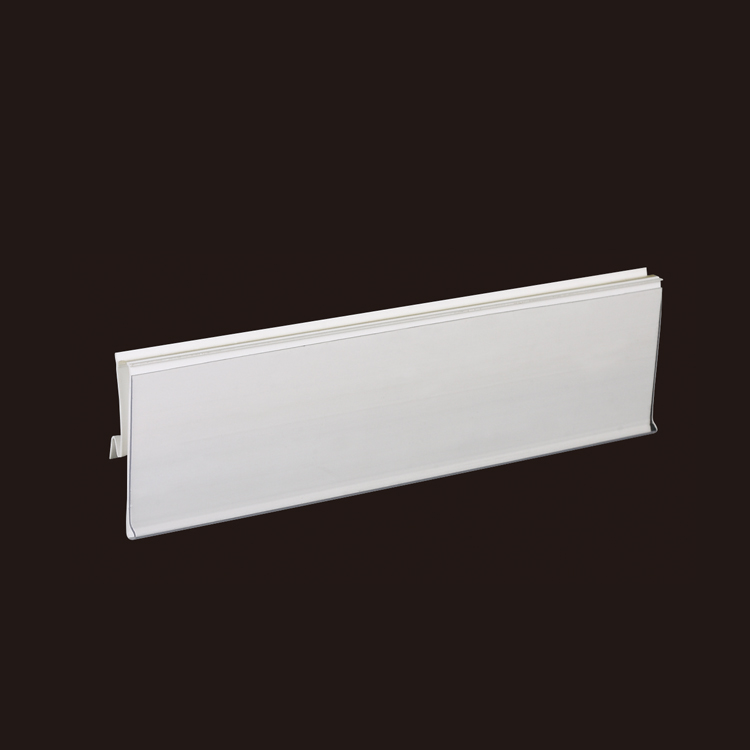
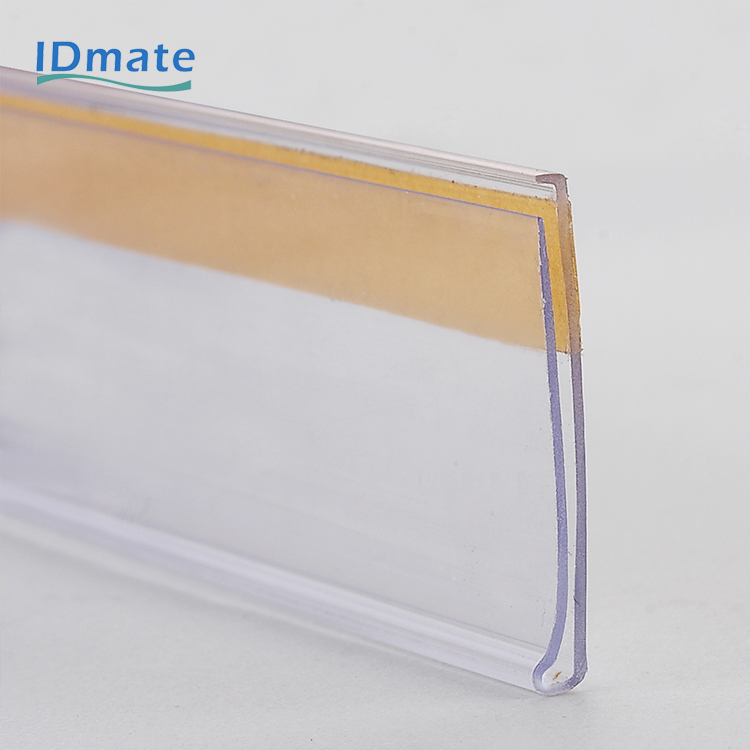
Self-adhesive holders bond to any clean, dry, flat surface. That includes plastic bins, wooden shelving, painted metal, glass, and the coated wire used in many warehouse racks. The adhesive does the work that magnetism cannot.
The trade-off is permanence. A self-adhesive holder is designed to stay put. Removing it may leave residue or damage a soft surface, depending on the adhesive and the substrate. That is acceptable for fixed locations and problematic for racks that are reconfigured often.
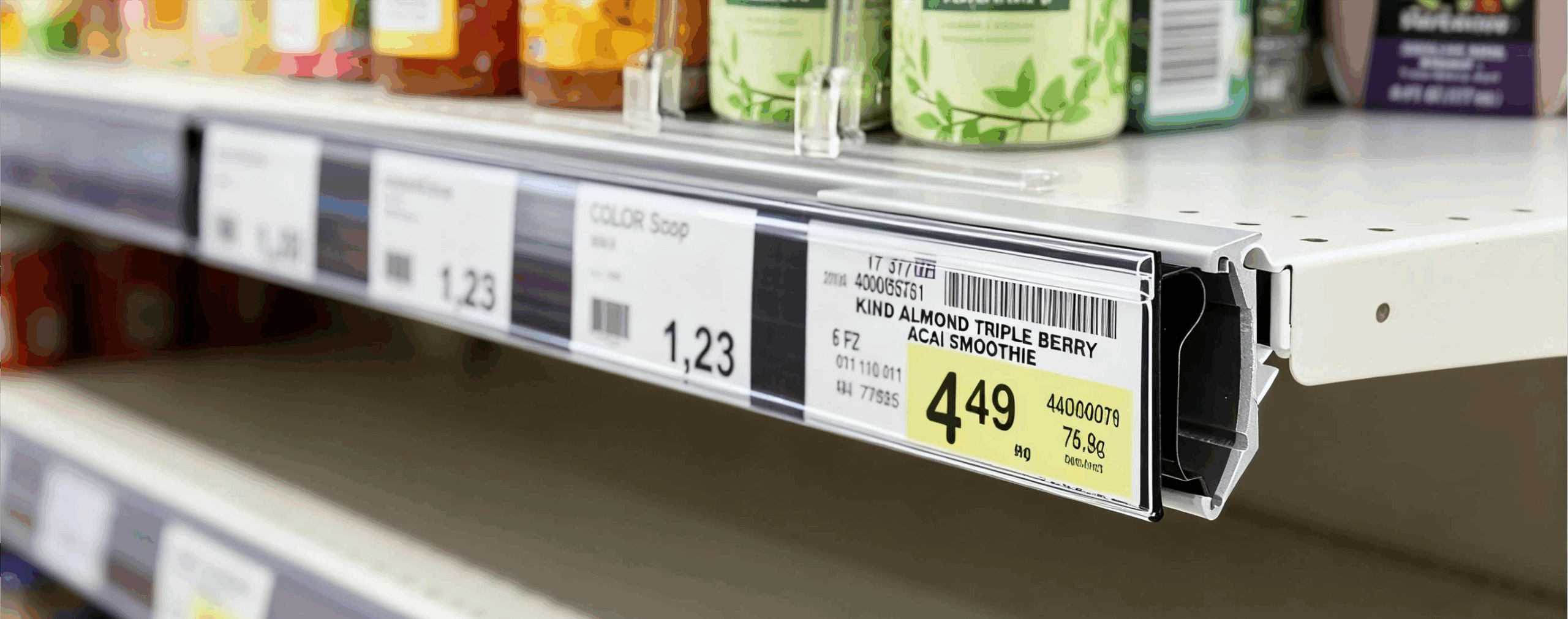
Data strips, the broader category that includes both adhesive and clip-on formats, cover shelf-edge labeling where a flat mounting face exists. The data strips range is organized by mounting style, so the surface type is the first filter in the catalog as well.
Self-Adhesive vs Magnetic Label Holders: Relocation Frequency and Total Cost
When Locations Rarely Change, Adhesive Is the Lower-Cost Choice
A self-adhesive holder costs less per unit and installs faster. If a warehouse sets up rack locations once and rarely changes them, there is no operational benefit to paying more for magnetic holders. The adhesive holds for years, the labels slide in and out of the window, and the holder does not need to be touched.
This is the common case in fixed storage, archive rooms, and shelving that follows a stable layout. The lower unit price and the wide surface compatibility make adhesive the default choice.
When More Than ~20% of Locations Change Per Year, Magnetic Pays Back
The economics reverse when locations move. A five-year total cost model compares the two formats using a simple formula: the number of locations times the unit cost, plus the number of changes per year times five years times the cost of each change. The cost of each change includes labor to remove the old holder, clean residue, apply a new holder, and reinsert the label.
In a representative calculation, 2,000 locations with a 5% annual change rate produce a five-year adhesive cost of roughly $4,000** versus about **$8,550 for magnetic. At a 25% annual change rate, the adhesive cost rises to about $12,000** while magnetic falls to about **$10,750, because magnetic holders are reused rather than replaced. The crossover point sits near 20%.
The practical rule: if fewer than one in five locations changes per year, adhesive is cheaper. If more than one in five changes, magnetic is cheaper over five years. The exact crossover depends on unit prices and labor rates, but the direction is consistent.
Magnetic holders also avoid adhesive failure in freezers and coolers, where cold temperatures harden standard pressure-sensitive adhesives. That is a secondary benefit, not the main reason to choose magnetic.
How to Choose Between Self-Adhesive and Magnetic Label Holders

Three-Question Decision Checklist
- What is the surface? If it is ferrous steel and the label may move, magnetic is viable. If it is plastic, wood, glass, or coated wire, self-adhesive is the only option of the two.
- How often will the location change? Estimate the annual change rate. Below roughly 20%, adhesive is more economical. Above 20%, magnetic pays back.
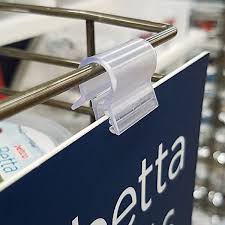
- Is residue acceptable? Adhesive removal can leave residue on some surfaces. If the surface cannot tolerate residue, magnetic or a clip-on shelf label holder is the better fit.
IDmate Supply Options for Both Formats
IDmate supplies self-adhesive label holders and data strips in multiple profiles, insert heights, and custom lengths. The catalog is organized by mounting style, which lets a buyer choose per application rather than committing the whole facility to one format. For racking that mixes steel uprights with plastic bins and wire shelves, a mixed approach is often the most practical: magnetic on the steel, adhesive on everything else.
FAQs About Self-Adhesive and Magnetic Label Holders
Can I use magnetic label holders on plastic bins?
No. Magnets need a ferrous steel surface. Plastic bins, wooden shelves, and aluminum extrusions will not hold a magnetic holder. Use a self-adhesive holder for those surfaces.
Can self-adhesive label holders be moved without damage?
Removable adhesive is designed for lower-residue removal, but permanent adhesive may leave residue and require cleaning. If the holder must move repeatedly, magnetic or clip-on is the better format.
Which is cheaper over five years?
It depends on the change rate. Below roughly 20% annual location changes, self-adhesive is cheaper. Above 20%, magnetic pays back because the holders are reused instead of replaced.
Does IDmate supply both magnetic and self-adhesive label holders?
IDmate supplies self-adhesive label holders and data strips in clip-on, adhesive, and hanging formats, with custom sizes and wholesale quantities. Magnetic formats and other mounting styles can be confirmed against the specific shelving and application requirements.