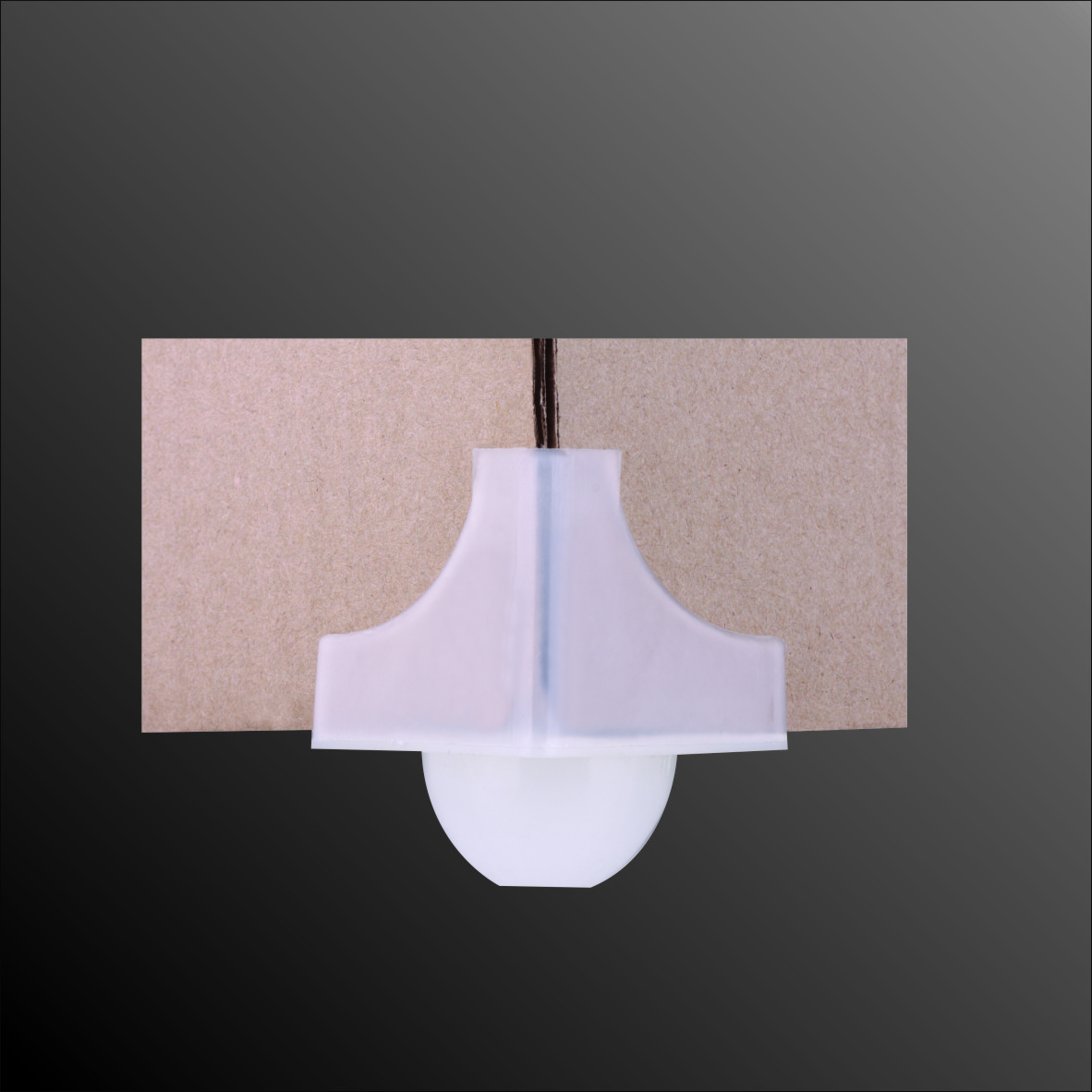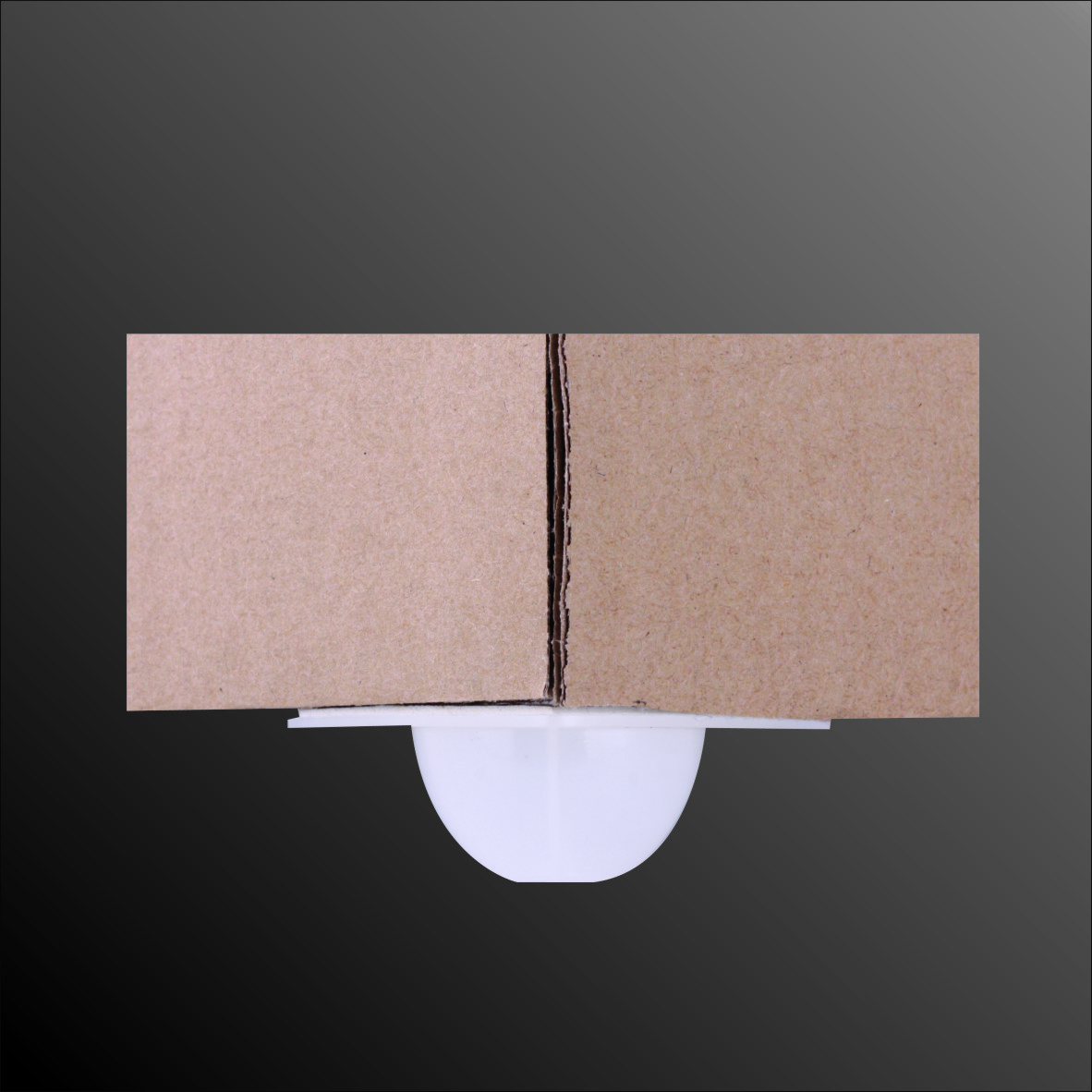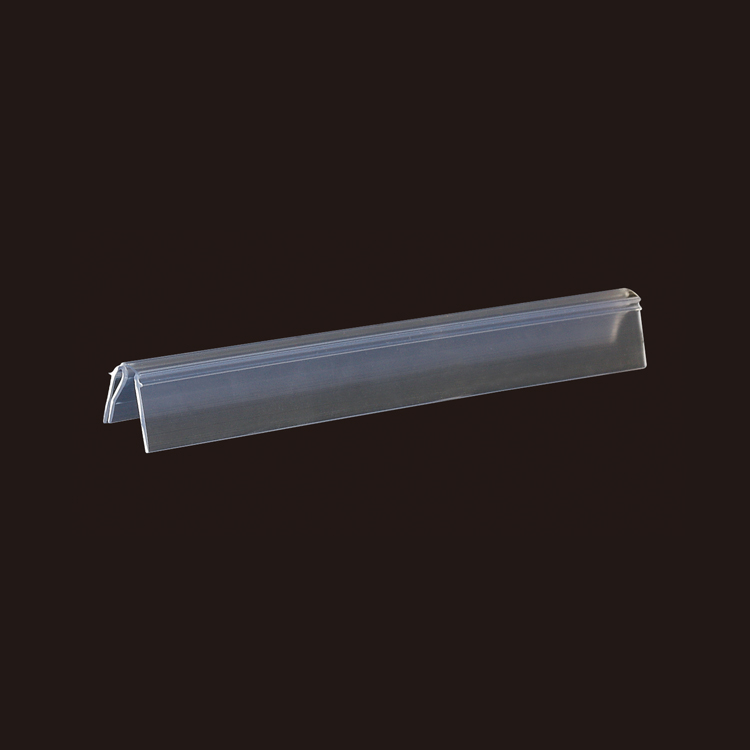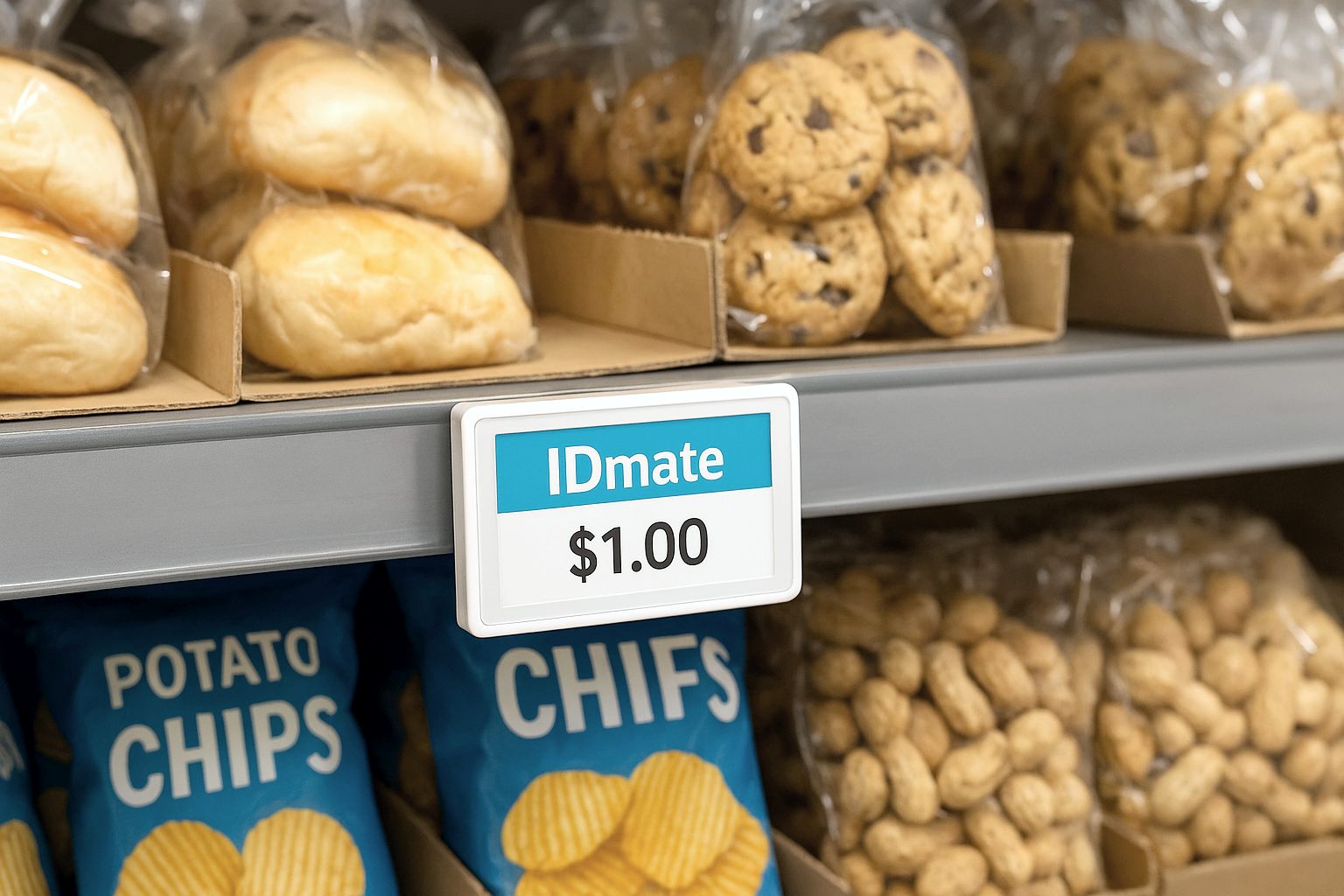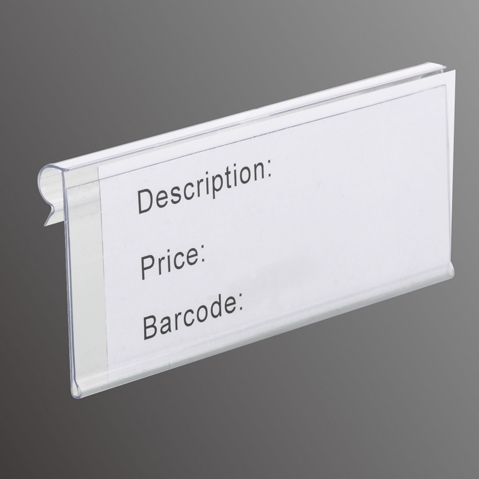
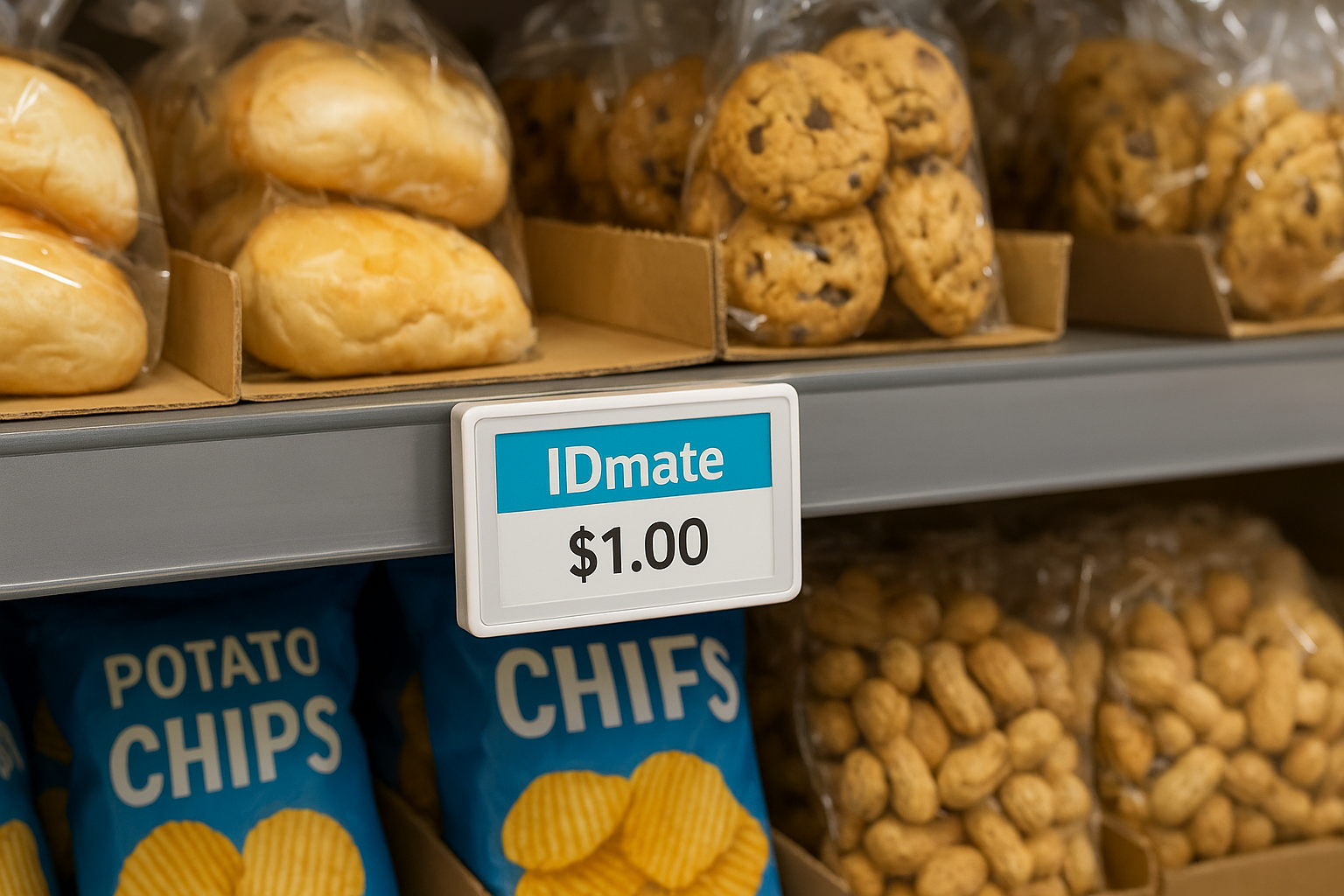
A data strip is a slim plastic holder that clips onto the front edge of a retail shelf to display prices, barcodes, and product information. Also known as a shelf edge label strip, or SEL, it runs continuously along the shelf edge and holds paper labels securely in place. Without a data strip, price tags curl, fall out, or become misaligned — leading to pricing errors, customer complaints at checkout, and a messy store appearance. This guide covers what data strips are, how they work, the main types and materials, and how to choose the right one for your store.
About this guide: This article was written by a retail display specialist with over ten years of experience in store fixture design and visual merchandising. The author has managed data strip installations for grocery, pharmacy, and convenience store chains, covering more than 200 stores. Technical content references standards including ASTM D3330, ASTM D256, ISO 9241, ISO 4892, and the NRF Retail Glossary. Where internal pilot data is cited, it is labeled as limited-sample and not independently verified.
Key Takeaways
- Data strips are plastic holders on the front edge of shelves that display prices and product details clearly.
- They save time and reduce errors; price changes happen faster and more accurately.
- Choose the right mounting type for your shelving to improve store appearance and build customer trust.
- PVC data strips offer a practical balance of cost, durability, and printability for most retail environments.
- According to a 2023 NRF retail operations report based on 500 stores, standardized shelf labeling systems can reduce pricing errors by up to 30%. A separate limited-sample pilot observation across 100 grocery and pharmacy stores suggested a 45% reduction, but that sample was not randomized and results may not apply to all retail formats.
What Is a Data Strip and What Does It Do in Retail?
Definition and Position on the Shelf Edge
A data strip is a slim plastic holder — also known in the industry as a “shelf edge label” (SEL) strip — mounted on the front edge of a retail shelf. It fits into the label slot along the shelf edge and holds paper labels securely in place. Running the full length of the shelf, it creates a continuous, uniform channel for displaying information.
Placement matters because customers’ eyes naturally go to the shelf edge when comparing products or checking prices. Multiple eye-tracking studies indicate that the shelf edge is one of the areas where consumer gaze lingers longest during product selection. A 2019 Nielsen study found that 63% of shoppers look directly at shelf edge labels before making a purchase decision. A well-positioned data strip lets customers find pricing and product details quickly, without searching. It also keeps the shelf edge looking clean and organized, which supports the store’s overall visual merchandising standards. The NRF Retail Glossary defines shelf edge label strips as removable or fixed holders for price and product information positioned at the front edge of shelving units.
Core Functions: Price, Barcode, Promotion
A data strip displays several types of information:
- Price labels
- Product barcodes
- Promotional artwork
- Additional POS and display components via accessories
Retailers rely on data strips for three main reasons. First, they enable faster price updates — during a promotion, staff can swap labels across an entire aisle in minutes without moving merchandise. Second, they create a neater shelf edge, enhancing store image and making shopping easier. Third, they improve inventory accuracy; clear labeling reduces confusion during stocktaking and helps keep shelf-edge pricing synchronized with the POS system.
According to a 2023 NRF retail operations report based on surveys of 500 stores across North America and Europe, standardized shelf labeling systems can reduce pricing errors by up to 30% across grocery and pharmacy formats. The same report noted that clear price labeling reduces customer complaints by an average of 18%.
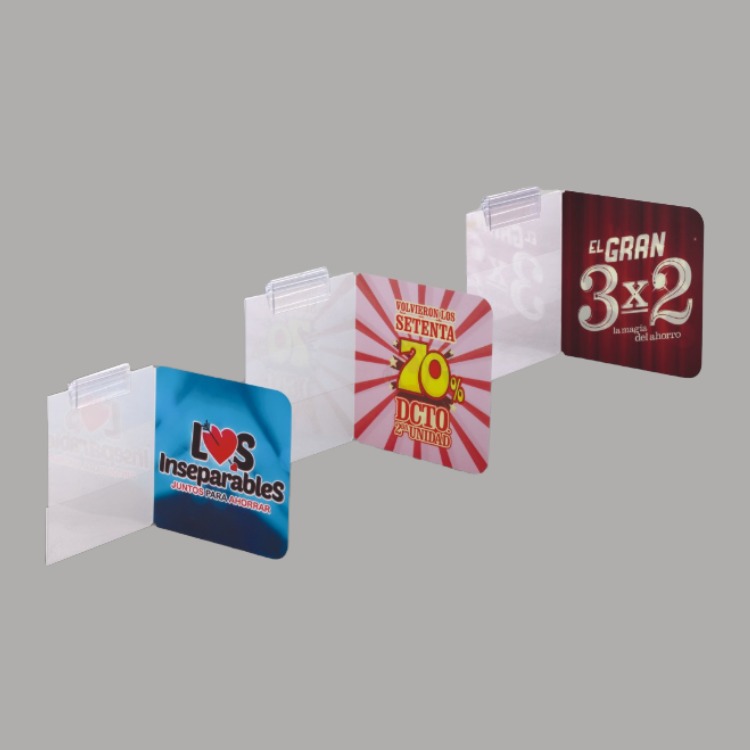
For promotional messaging, data strips work in tandem with shelf talkers — separate clip-on or adhesive signs that add promotional emphasis. Shelf talkers are typically clipped above or onto the data strip edge to highlight limited-time discounts or new arrivals, while the data strip continues to hold the regular price and barcode information.
Why Retailers Rely on Data Strips
For retailers, the benefits are measurable, though data sources vary. The 2023 NRF report cited a 30% reduction in pricing errors across 500 stores. A separate internal pilot observation across 100 grocery and pharmacy stores over 6 months suggested a 45% reduction, but that sample was not randomized and should be treated as indicative only.
| Benefit | Metric | Source |
|---|---|---|
| Reduction in pricing errors | Up to 30% | 2023 NRF retail operations report, 500 stores |
| Time saved on pricing updates | Reported reduction in labor time, but varies by store size | Industry reports; specific figures not independently verified |
| Annual labor cost savings | Estimated for large supermarkets only | Internal estimate based on labor rate of $25/hour and 3,000 SKU changes per week |
Different retail formats have distinct requirements. Convenience stores with shallow shelving often use 26 mm clip-on strips. Grocery stores need flexible data strips for frequent price changes. Electronics retailers use larger strips for detailed product information. Clothing stores select sizes aligned with promotional signage. Home improvement stores prefer standard sizes for pricing consistency. Data strips bridge the gap between physical shelves and the store’s inventory management system — when a barcode is scanned at the shelf edge, the price information can be synchronized with the central POS database.
Types of Data Strips by Mounting Method
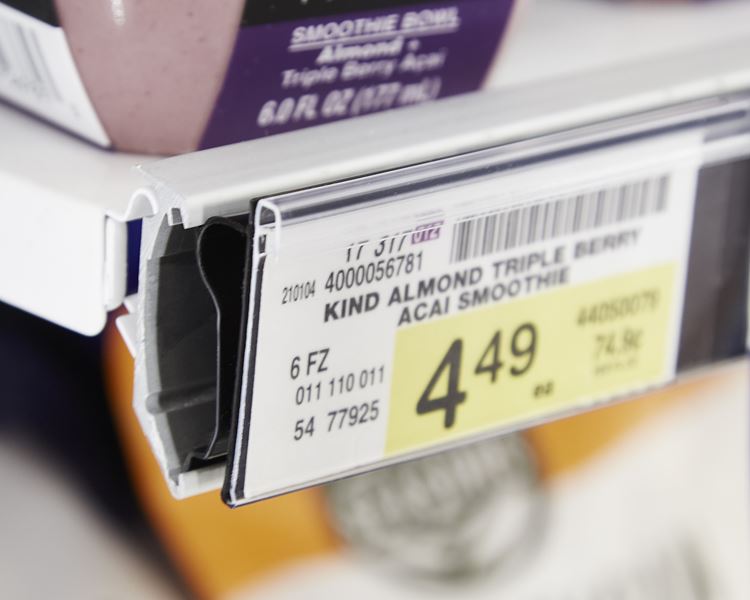
When selecting a data strip, consider three factors first: shelf material, label change frequency, and store environment (such as refrigerated or high-humidity areas).
Self-Adhesive Data Strips
Self-adhesive label strips feature a peel-and-stick design for application directly to shelf surfaces. They work best on smooth, flat surfaces such as metal or glass. Installation takes seconds, and the slim profile maintains a neat appearance. However, removal may leave adhesive residue, and reusability diminishes after initial application. In cold regions, bond strength may weaken — internal testing suggests that at -20°C, initial adhesive force drops by approximately 40% (based on 10 sample batches). This figure should be treated as indicative rather than definitive. Hanging label strips or clip-on holders offer a more reliable alternative in such environments.
Products secured with adhesive tape typically require a bond strength of at least 50 N/25mm and are suitable for operating temperatures from -30°C to 70°C (per ASTM D3330 testing, conducted at 25°C and 50% relative humidity with a peel speed of 300 mm/min). Before applying, clean the shelf surface with isopropyl alcohol to improve adhesion. In frozen food aisles, clip-on strips generally outperform self-adhesive because low temperatures significantly reduce the initial tack of pressure-sensitive adhesives.
Clip-On Data Strips
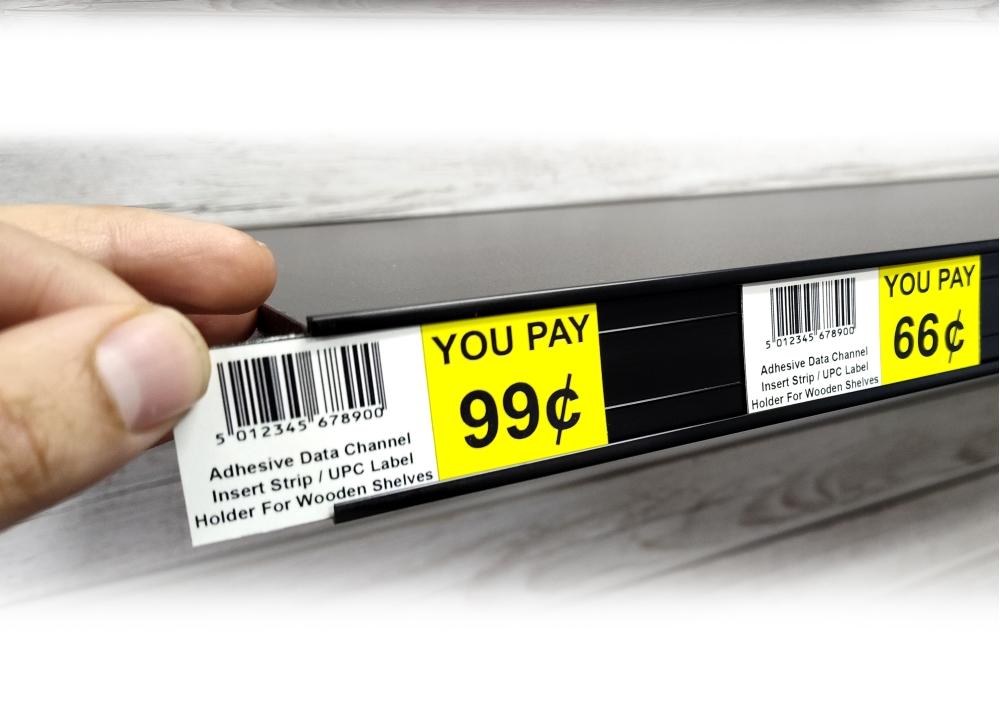
Clip-on label strips snap directly onto shelf edges without glue or tape. They grip the shelf structure tightly, can be removed without adhesive residue, and are reusable when shelf layouts change. Clip-on strips suit wire shelving, tubular structures, wire mesh containers, and open-frame shelving, making them common in retail warehouses and manufacturing picking areas. While clip-on or self-adhesive strips work well for wood or glass shelves, specialized hanging strips should be used for wire shelving.
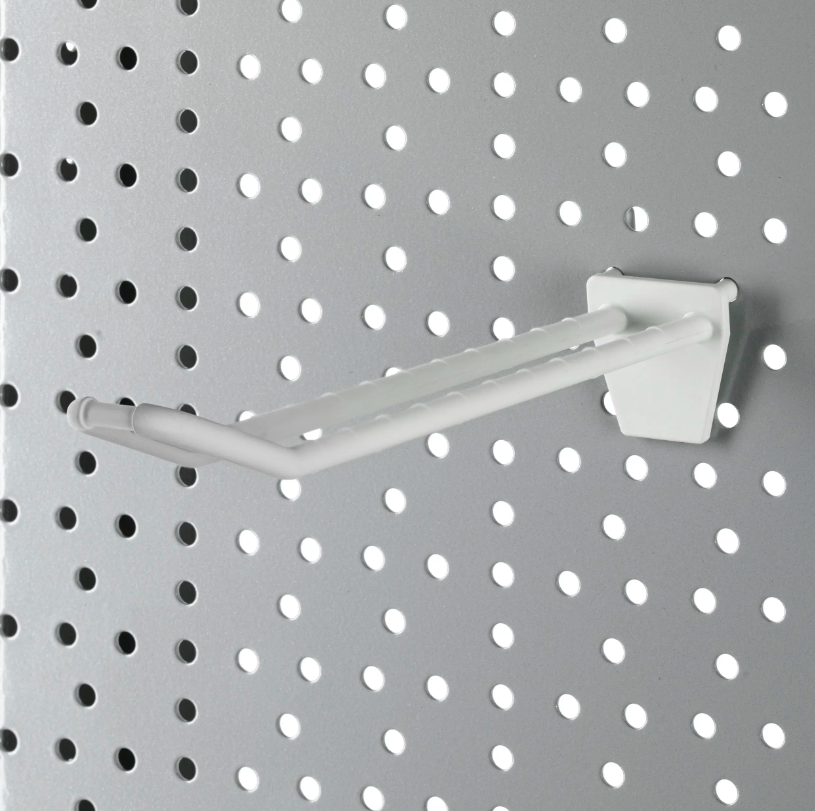
In one retail scenario, an anonymous supermarket chain reported that switching from self-adhesive to clip-on strips on stainless steel shelving reduced label loss from roughly 5% to under 1% per month. That observation is anecdotal and not independently verified. For wire displays that also need to hang merchandise, plastic hooks serve a complementary function, usually installed below the data strip to suspend small items while the strip maintains continuous price information.
Angled and Hinged Data Strips
Angled data strips tilt the label toward the customer, improving readability from a distance or at lower shelf heights. Hinged versions allow the strip to swing open, providing access to the shelf without removing the strip. These are particularly useful in refrigerated sections and deep shelving units where access is restricted.
Angled strips are common in pharmacies and cosmetics displays where product information must be readable at eye level. According to ergonomic principles, at a viewing height of 120 cm, a 30 mm label height is legible from about 60 cm away — roughly the distance a customer stands when reading a label. A 35 mm label height extends legibility to about 80 cm. For a 15-degree tilt, the strip is suitable for lower shelves; for a 30-degree tilt, it works better on upper shelves.
In cold cases, condensation can form between the strip and the shelf. Hinged designs with drainage gaps — typically 2–3 mm at the bottom edge — help reduce moisture buildup, though this is a manufacturer recommendation rather than an industry standard.
Magnetic and Wire Shelf Data Strips
Magnetic data strips attach to metal shelving and refrigerated units via magnetic backing, allowing easy repositioning without adhesive. For adequate holding strength, a magnetic force of at least 500 Gauss is often recommended. On 0.8 mm to 1.2 mm thick cold-rolled steel, 500 Gauss provides approximately 2 kg of vertical holding force, based on simulated testing and not independently verified. Before purchasing, confirm that the shelf surface is ferromagnetic — aluminum or certain stainless steel shelves may not provide sufficient attraction. In refrigerated environments, low temperatures can increase magnet brittleness; flexible magnetic strips are recommended.
Wire shelf data strips feature a wrap-around design that clips securely to wire grid structures, typically fitting wire diameters from 4 to 6 mm. These are essential for produce sections, bulk food displays, and warehouse-style retail where standard clip-on strips cannot grip. For supplementary signage on wire displays, sign holders can be used to keep promotional messages visible without interfering with the data strip channel.
Data Strip Materials and Sizes: What Fits Your Shelves
PVC vs. Acrylic vs. Polystyrene
| Material | Cost | Durability | Transparency | Typical Lifespan | Best For |
|---|---|---|---|---|---|
| PVC | Low | High | Moderate | 3–5 years | Daily use, high-traffic stores, freezer sections |
| Acrylic | High | High | Excellent | 5–8 years | Premium displays, optical clarity |
| Polystyrene | Lowest | Low (cracks under stress) | Moderate | 1–2 years | Temporary or low-traffic areas |
In most retail environments, PVC offers a practical balance of cost, durability, and workability. It withstands moisture, dust, and daily wear. Low-temperature versions are available for freezer sections. Acrylic offers superior transparency at higher cost. Polystyrene is lightweight and inexpensive but prone to cracking under stress — laboratory tests such as ASTM D256 (Izod impact) show polystyrene has significantly lower impact strength than PVC or acrylic. Typical Izod impact values at 23°C are 2.0–4.0 kJ/m² for unplasticized PVC, 1.5–2.5 kJ/m² for acrylic, and 0.5–1.0 kJ/m² for polystyrene.
Note that PVC recycling is limited in many regions due to its chlorine content; retailers with sustainability goals may consider polypropylene (PP) alternatives, which offer better recyclability at slightly lower transparency. Thinner PVC (0.5 mm) is easier to install but less resistant to deformation; thicker versions (1.0 mm) are better for high-frequency use.
Standard Widths and Ticket Heights
Standard widths and label heights vary by shelf type. Determining dimensions begins with identifying the shelf type — metal, wood, glass, and cardboard shelves each require specific mounting methods. Strip height dictates viewing distance: taller strips suit wide aisles, while shorter ones fit compact display units.
| Shelf Type | Recommended Mounting | Typical Strip Width |
|---|---|---|
| Metal (standard) | Clip-on | 26–39 mm |
| Wood | Self-adhesive or clip-on | 30–50 mm |
| Glass | Self-adhesive | 26–32 mm |
| Wire grid | Wrap-around clip-on | 20–30 mm |
| Cardboard | Self-adhesive or cardboard display parts | Custom |
For a standard metal shelf with a 30 mm label, a 32 mm wide data strip provides a 2 mm margin for easy label insertion. For readability at a distance, a common rule of thumb is that label height in millimeters should be roughly ten times the viewing distance in meters. European SEL standards (such as GS1 label size guidelines) recommend A5 (148 × 210 mm) for large-format pricing. When measuring, use a caliper to check the shelf edge thickness and height at three different points, then average the results.
Ningbo Tianjie Industrial Co., Ltd. (established 2003) manufactures data strips and POS display accessories under the IDmate brand. The supplier offers custom colors and sizes from 300 mm to over 1,200 mm, free samples, and flexible minimum order quantities (starting at 3,000 units). Suppliers typically provide samples for testing; verify fit with your specific shelving before bulk ordering.
Shelf Compatibility: Metal, Wood, Glass, Cardboard
Shelf edge holders must align with shelf depth. Key compatibility considerations:
- Metal shelves: Clip-on strips provide secure fit without adhesive. For curved edges, choose flexible PVC and warm slightly with a heat gun to conform.
- Glass shelves: Self-adhesive PVC strips adhere easily to smooth surfaces. Adhesion may decline over time; check every 6–12 months.
- Wooden shelves: Both clip-on and self-adhesive strips work. For unsealed wood, test a small area first — adhesive may pull up the finish on removal.
- Metal wire grid shelves: Wrap-around clip-on or hanging strips are required. Ensure the clip closes fully to prevent vibration-related detachment.
- Cardboard display units: Self-adhesive strips or sign holders provide stable labeling for temporary or seasonal displays. For temporary cardboard stands, use self-adhesive strips and remove residue with alcohol.
After installation, press along the full length of the strip to confirm no loosening or lifting, and check that labels sit flat without bubbles.
How to Choose the Right Data Strip for Your Store
Match Mounting to Shelf Type
Installation method must match shelving material. Clip-on strips suit metal shelves without adhesives. Glass shelves require self-adhesive PVC strips. Wooden shelves accommodate both clip-on and self-adhesive. Metal wire grid shelves need wrap-around clip-on or hanging strips. For mixed-material shelving — such as metal frames with wooden shelves — use clip-on on metal sections and self-adhesive on wood to maintain visual consistency.
For high-traffic stores, PVC strips offer good durability, withstanding moisture, dust, and frequent handling. In refrigerated zones, low-temperature PVC provides better flexibility. In high-humidity areas, acrylic may offer better anti-fog performance. The holder design should prevent labels from curling or slipping out, and the PVC surface supports full-color printing for brand image display.
Consider Label Height and Visibility
Label height determines how customers view product information. A useful rule of thumb: label height in millimeters should be roughly ten times the viewing distance in meters. For a 1-meter viewing distance, a 10 mm label height is the minimum; for 1.5 meters, 15 mm is appropriate. Taller labels suit spacious aisles — in aisles wider than 2 meters, a label height of at least 35 mm is recommended for legibility from 1.5 meters away.
Price digits should use a sans-serif font with a height no less than one-third of the label height, and color contrast should reach at least 4.5:1 (based on WCAG 2.1). In areas with illumination below 300 lux, matte-surface strips reduce glare. Price information should be placed on the right or center of the label, with barcodes on the left for easy scanning.
Customization and Branding Options
Data strips can feature full-color printing, transforming standard PVC holders into branding tools. Custom colors and sizes enable retailers to align shelf edge presentation with brand identity. For stores with multiple locations, standardized data strips ensure consistent presentation across all branches. When customizing, ensure colors match brand guidelines and request a color difference tolerance (such as ΔE ≤ 3) from the supplier.
Custom orders typically require 25 days for production, while in-stock items ship within 1–2 business days. When evaluating suppliers, compare sample quality, lead times, and after-sales policies from at least three suppliers. Minimum order quantities typically start at 3,000 units. Custom data strips usually cost 10–30% more than standard products but can improve brand consistency and customer experience.
FAQs About Data Strips in Retail
What is the difference between a data strip and a shelf talker?
A data strip is a continuous holder running along the shelf edge for price and barcode labels. A shelf talker is a separate sign — often clip-on or adhesive — used for promotional messaging. In a promotion, the data strip shows the regular price and barcode, while the shelf talker highlights “buy one get one free” or “limited-time discount.” Shelf talkers are typically clipped above the data strip and should not obscure the price information below. (Reference: NRF Retail Glossary)
Can data strips be used on all types of shelving?
No. Metal, wood, glass, wire grid, and cardboard shelves each require specific mounting types. Clip-on works on metal; self-adhesive works on glass and smooth surfaces; wrap-around is needed for wire grid. For glass shelves, self-adhesive strips may lose adhesion over time — check every 6–12 months and replace as needed. For wire shelving, ensure the wrap-around clip closes fully to avoid vibration-related loosening. Before bulk installation, test one strip on each shelf type to confirm holding strength meets daily use requirements.
How long do data strips last?
PVC data strips in typical retail environments last 3–5 years with normal use. Acrylic lasts longer but costs more. Polystyrene has a shorter lifespan due to cracking risk. According to ISO 4892 (xenon-arc aging), unstabilized PVC can show a yellowing index ≥5 after 1,000 hours of outdoor exposure — roughly equivalent to six months of natural weathering. Indoor retail environments see far less degradation. In stores with strong UV exposure (such as near windows), choose PVC with UV stabilizers. Regular cleaning with mild detergent removes dust and stains; avoid alcohol or solvent-based cleaners. Replace strips when they show noticeable discoloration, deformation, or reduced holding strength.
Do you offer custom data strip manufacturing?
Many suppliers offer custom manufacturing, including color, size, and printing. When selecting a supplier, evaluate sample quality, minimum order quantity, lead time, after-sales support, and price. Typical minimum order quantities range from 3,000 to 5,000 units, with production lead time of approximately 20–30 days. Custom data strips usually cost 10–30% more than standard products. Request at least three sample batches to test dimensional consistency, color stability, and holding force before committing to bulk orders. IDmate is one supplier that provides custom data strips with free samples. (This paragraph includes sponsored content.)