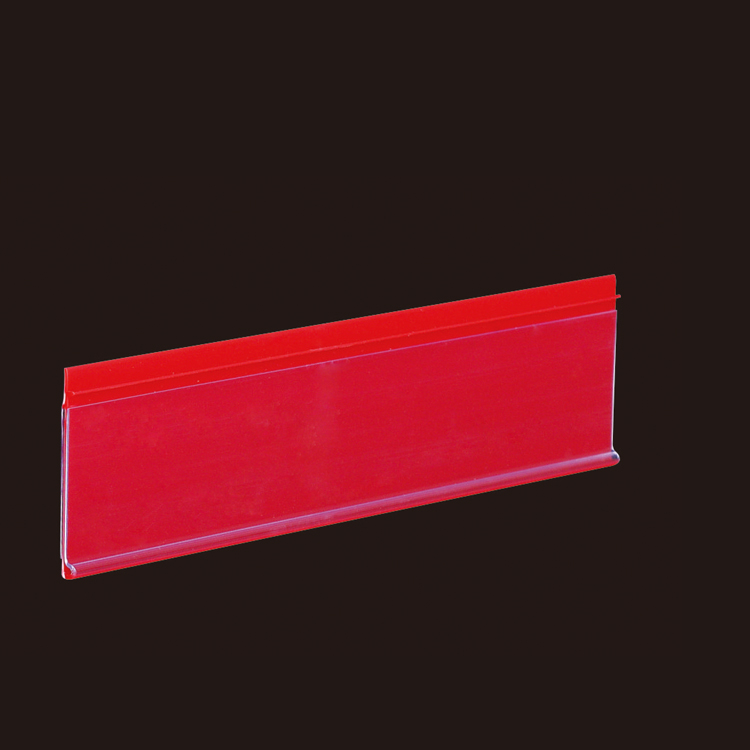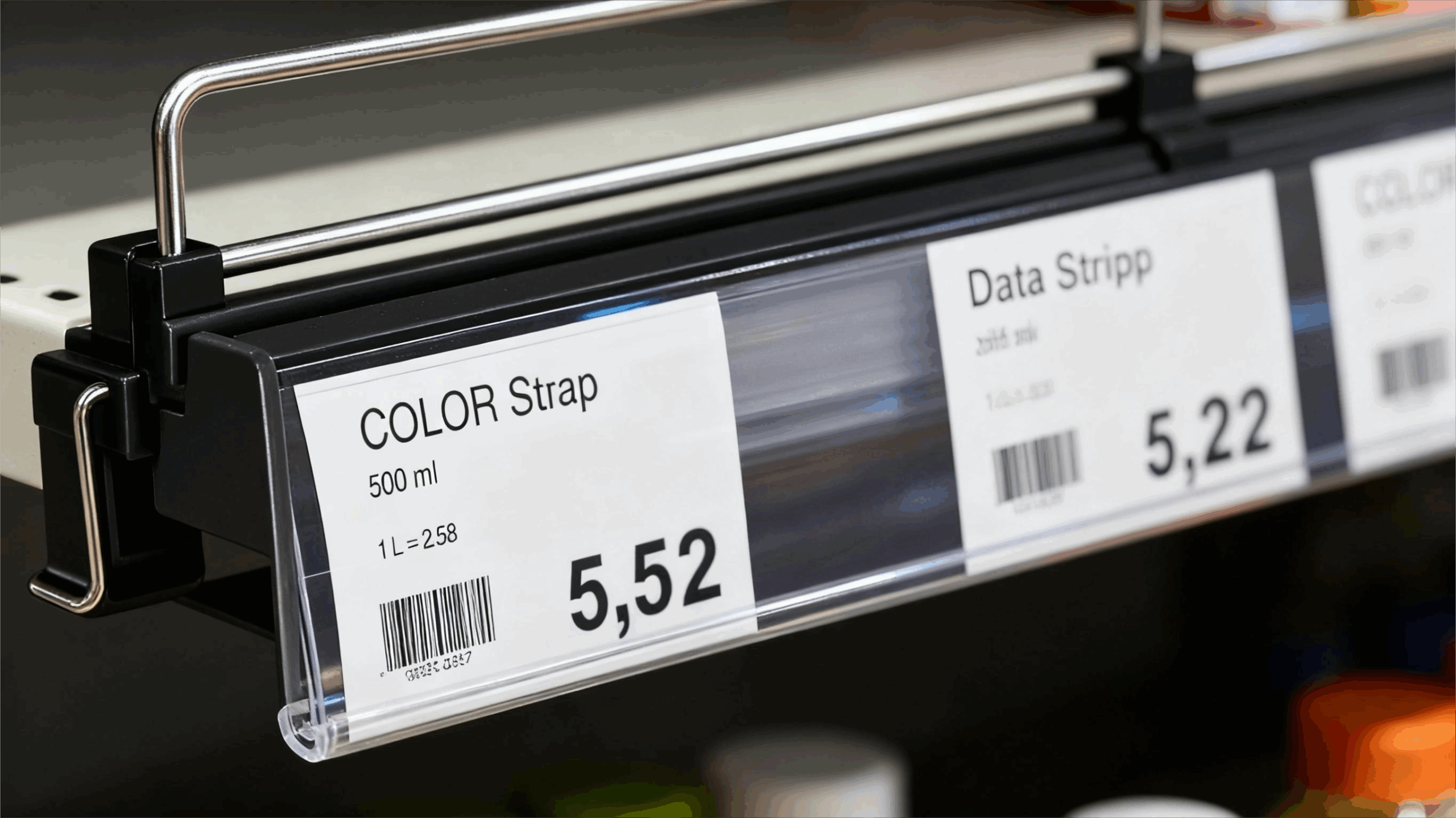
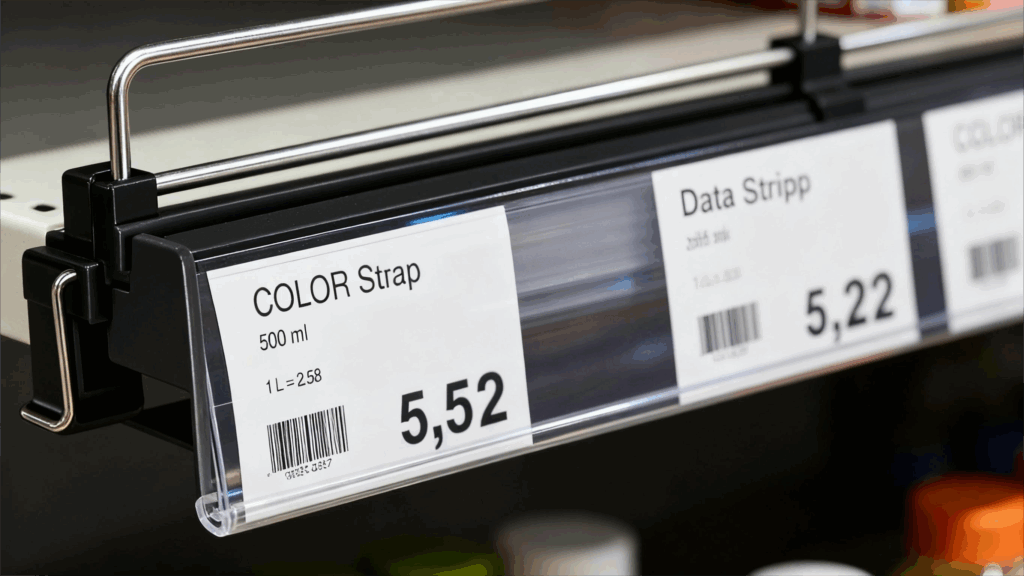
To measure and cut data strips for custom shelf lengths, you must measure the exact usable edge of the shelf (excluding brackets and uprights), add a 2–3 mm clearance on each end, and use a fine-toothed saw or heavy-duty utility knife to ensure a clean, straight cut. A proper cut prevents the strip from bowing, maintains a tight grip on the shelf, and ensures price tags slide in without snagging.
Key Takeaways
- Measure usable length: Do not measure the total shelf width; measure only the flat edge where the strip can sit.
- Leave clearance: Subtract 4–6 mm total from your measurement so the strip does not butt against shelf uprights.
- Cut with the right tool: A utility knife with a fresh blade works for PVC; a fine-toothed hacksaw is better for thick PETG.
- Smooth the edges: Filing the cut edge prevents sharp burrs that can tear paper tags or cut fingers.
Measuring Data Strips for Custom Shelf Lengths
Measuring the Usable Shelf Edge vs. Total Length
Never rely on the manufacturer’s listed shelf width. Always use a tape measure. Start at the inner edge of the left upright and measure to the inner edge of the right upright. This is your “usable length.” If there are center brackets or dividers, treat each section as a separate measurement.
Accounting for Uprights and End Brackets
If you cut a strip to the exact full width of the shelf, it will not fit. The end brackets (or the uprights of the gondola) protrude slightly. Subtracting 3 mm from each end (6 mm total) ensures the strip drops easily into the C-channel or snaps onto the flat edge without buckling. If your fixture lacks a C-channel and you are working with a flat metal or wood face, adhesive label holders follow the same measurement and cutting rules.
Tools and Techniques to Cut Data Strips

Choosing the Right Cutting Tool
Using the wrong tool will crush the profile or crack the plastic.
- For standard PVC data strips, a sharp utility knife with a fresh blade is usually sufficient. Score the plastic deeply on the flat side, then snap it.
- For thicker PETG strips or co-extruded profiles, a fine-toothed hacksaw or a power miter saw with a plastic-cutting blade provides the cleanest edge.
Avoiding Cracks and Jagged Edges
Plastic becomes brittle in cold weather. If you are cutting strips in an unheated warehouse in winter, let them warm up indoors first. When using a utility knife, make multiple light passes rather than trying to cut through the entire thickness in one aggressive push. Jagged edges will prevent the clear window from holding the paper tight. If you are also installing larger promotional signage, ensuring your clip-on shelf label holder is cut cleanly will keep the display looking professional.
Installing and Sealing Custom-Cut Data Strips
Filing and Smoothing Cut Edges
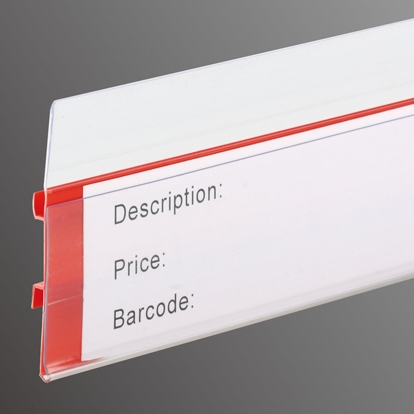
After cutting, run a deburring tool, a fine file, or a piece of sandpaper along the cut edge. This removes the sharp plastic burrs. Smoothing the edge is crucial because rough edges will catch the paper labels as you slide them in, causing the paper to tear and jam.
Ensuring Label Retention
If you cut a hollow profile, the cut end is now open. While this doesn’t usually affect the front window, ensure the cut is flush so it doesn’t interfere with the end caps (if your profile uses them). A clean cut preserves the tension along the entire length, ensuring the paper tags stay securely in place.
FAQ
Can I use standard scissors to cut data strips?
No. Scissors will distort the profile, causing the strip to warp and lose its grip on the shelf. They also leave jagged edges that will tear price tags. Always use a utility knife or fine-toothed saw.
How much clearance should I leave on each end of the shelf?
A 2–3 mm clearance on each end is standard. This allows for thermal expansion and ensures the strip doesn’t hit the metal uprights when you are pushing it into the channel.
Do custom-cut strips lose their grip on the shelf edge?
Not if cut correctly. The grip comes from the top and bottom lips of the strip profile. As long as the cut is straight and does not crush the channel opening, the strip will maintain a secure hold.