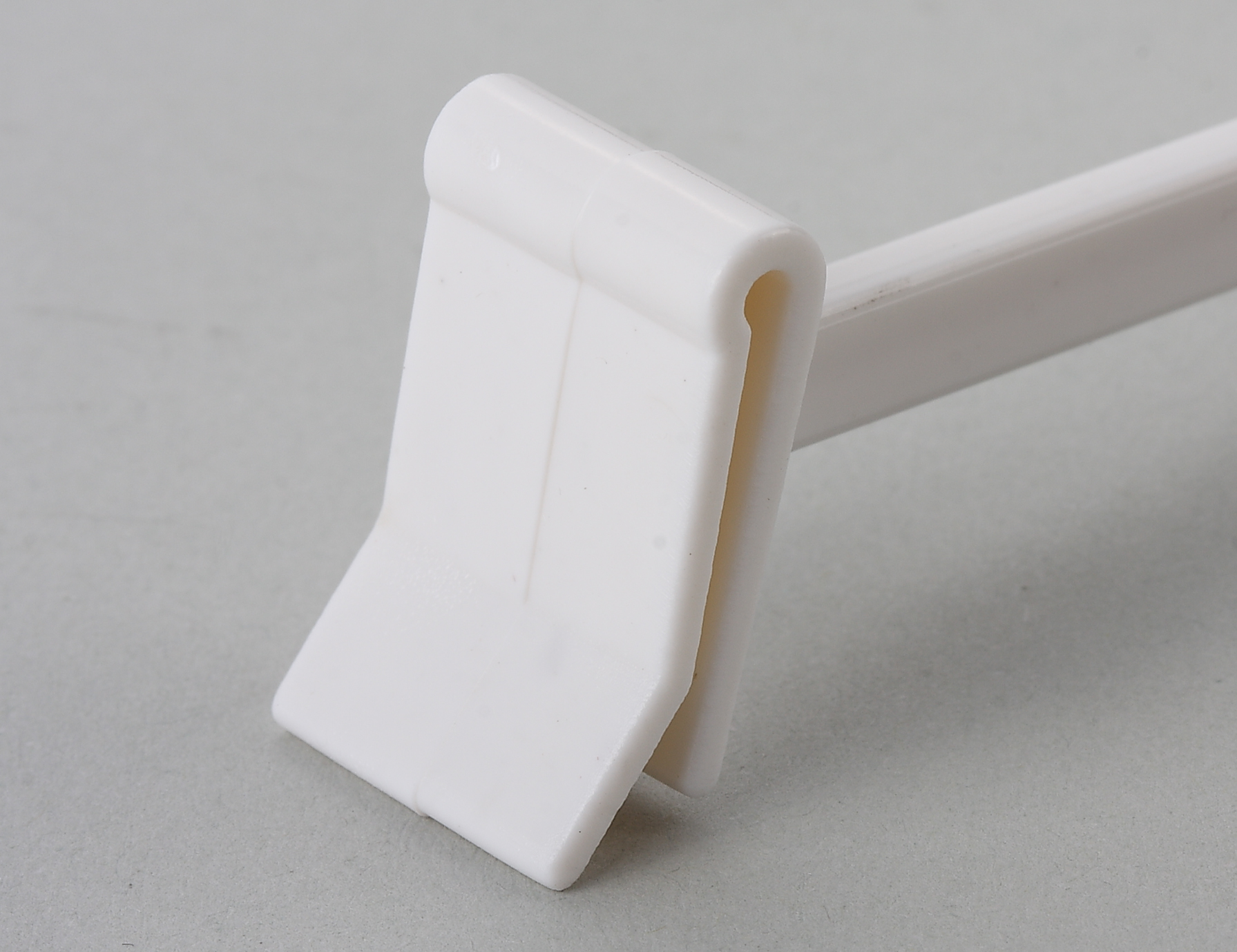

Choosing between clear label holders made from PVC or PETG depends on your store’s environment, budget, and long-term replacement cycle. PVC has a lower upfront cost per unit, but PETG offers superior optical clarity, impact resistance, and long-term durability, often delivering a lower total landed cost per store. The right choice is not about which plastic is “better” in general—it is about which material matches your shelf edge conditions.
Key Takeaways
- PVC costs less per strip, but PETG typically lasts longer, reducing replacement frequency and total landed cost.
- PETG transmits 90–92% of visible light; rigid PVC transmits 80–83%, with visible haze in thicker profiles.
- PETG holds up better in cold storage and high-traffic areas; PVC remains a cost-effective option for standard room-temperature displays.
- Both materials can be recycled, but PETG is generally easier to process in standard recycling streams.
Durability of PVC vs. PETG Clear Label Holders
PVC Clear Label Holders: Cost-Effective but Prone to Yellowing
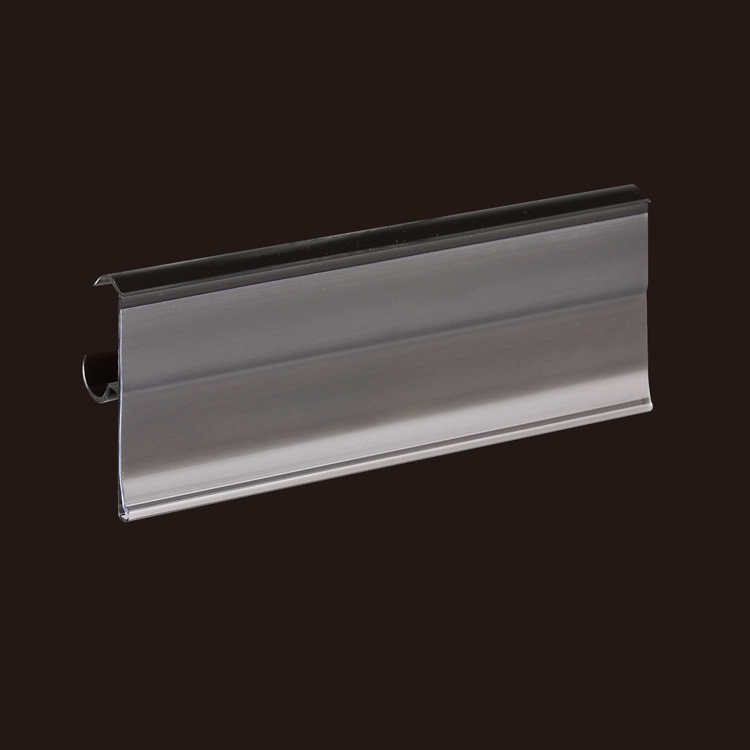
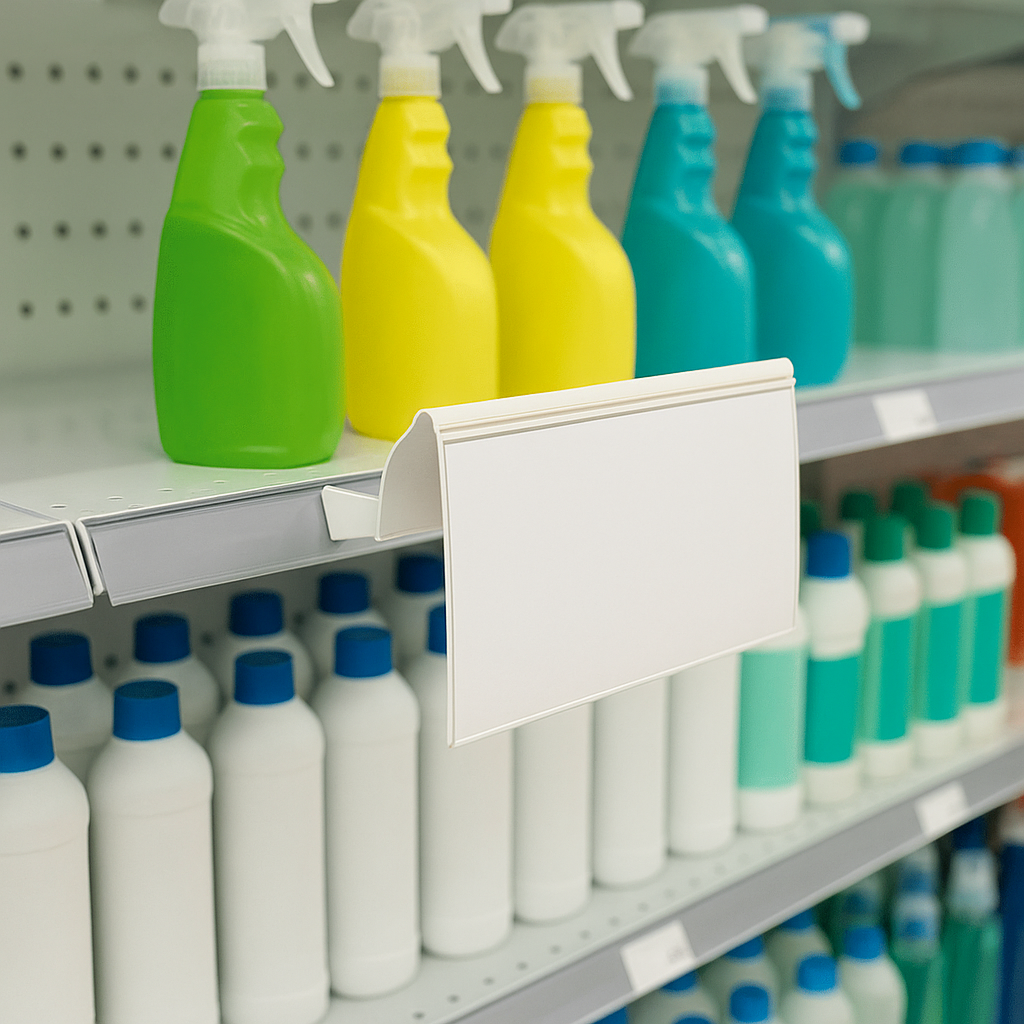
PVC is the standard material for shelf-edge data strips because it is economical, flexible, and easy to extrude in long runs. For a standard grocery aisle with moderate traffic and room-temperature conditions, a PVC strip does the job at the lowest upfront cost. However, PVC has a known weakness: under prolonged exposure to UV light or fluorescent store lighting, it can yellow over time, reducing the transparency that makes a label holder useful. In thicker profiles, the material also exhibits visible haze compared with PETG.
For high-turnover stores that reset planograms frequently, the lower unit price of PVC still makes sense. The trade-off is that the strips may need replacement sooner than a PETG alternative, and the yellowing can make price tags and barcodes harder to read near the end of their service life.
PETG Clear Label Holders: High Clarity and Impact Resistance
PETG delivers optical clarity that PVC cannot match. A standard PETG sheet transmits approximately 90–92% of visible light, compared with 80–83% for rigid PVC. That difference matters at the shelf edge: barcodes scan more reliably, price information stays legible, and the display looks cleaner under store lighting.
Beyond clarity, PETG is tougher. It resists cracking and impact damage better than PVC, which is particularly relevant for freezer doors, high-traffic aisles, and any fixture that sees frequent cart or stocking activity. The higher unit cost is offset by fewer replacements and fewer mid-cycle failures that force staff to re-label a bay.
Environmental Factors for PVC and PETG Clear Label Holders
PETG for Cold Storage and High-Traffic Areas
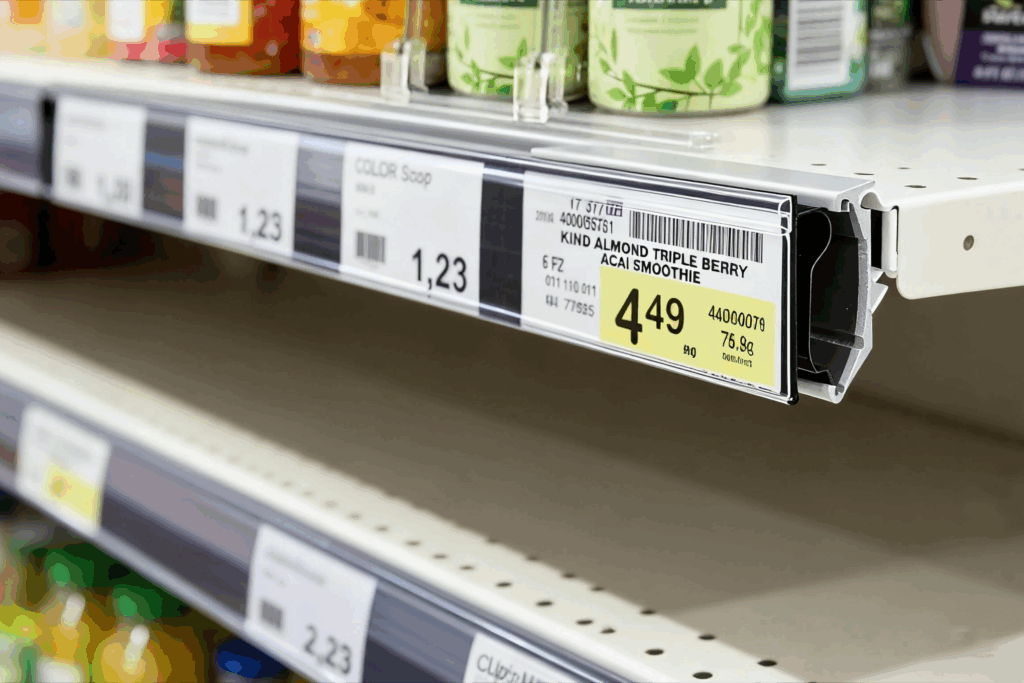
Cold storage is where the material gap becomes most obvious. PVC becomes brittle at freezer temperatures, increasing the risk of cracking when a cart bumps the shelf edge or a door closes against the fixture. PETG retains impact resistance at low temperatures, making it the more reliable choice for refrigerated cases, walk-in coolers, and frozen-food aisles.
High-traffic aisles present a similar logic. A standard PVC strip may survive normal handling, but repeated knocks from shopping carts or stocking equipment will shorten its life. PETG absorbs that abuse without cracking, which keeps the label holder intact and the pricing visible.
PVC for Standard Room-Temperature Displays
Not every shelf needs the premium option. For dry goods, center-store aisles, and back-of-house labeling in a climate-controlled environment, PVC remains a practical choice. It is flexible enough to fit standard C-channels and flat shelf faces, and the lower cost per meter makes it easier to re-strip an entire store during a reset.
The key is to match the material to the actual exposure. A PVC strip that never sees freezing temperatures, direct sunlight, or heavy impact will perform well for years. Specifying PETG for every shelf edge, regardless of conditions, adds cost without adding value. For stores that use adhesive-backed systems, self-adhesive label holders are available in both materials, so the choice can be made per application.
Sustainability of PVC and PETG Clear Label Holders
Recyclability of PETG Clear Label Holders
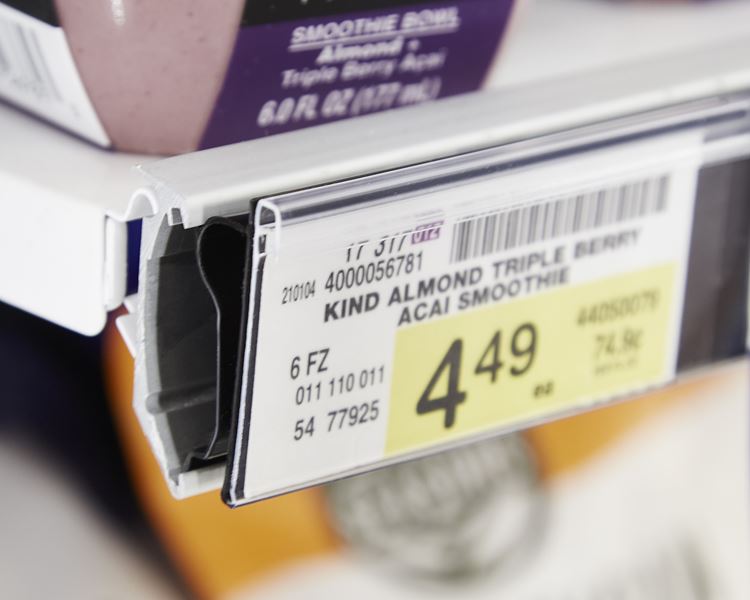
Both materials can technically be recycled, but the practical reality differs. PETG is generally easier to process in standard recycling streams than PVC, and it is more widely accepted by municipal programs. For retail chains with public sustainability commitments, choosing PETG for high-visibility shelf-edge strips can support those goals without changing the fixture design.
It is important to be precise about the claim. PETG is not a “zero-impact” material, and recycling infrastructure varies by region. The honest position is that PETG offers a better end-of-life pathway than PVC in many markets, while PVC remains a cost-effective option where recycling streams for either material are limited.
Brand Image and Material Choice
Material choice sends a signal. A clear, unscratched, non-yellowed label holder suggests a well-maintained store; a cloudy or cracked strip suggests neglect. For premium retail environments—cosmetics, specialty food, or any aisle where presentation affects purchase decisions—PETG’s optical clarity and impact resistance support the brand image. For larger promotional displays and aisle signage, the same material logic applies to sign holders: PETG keeps the message readable and the fixture looking new.
For standard grocery and discount formats, the signal matters less than the cost per bay. PVC keeps the shelf edge functional at the lowest possible spend, which is often the correct priority for high-volume, low-margin categories.
FAQ
Which material is better for outdoor or cold storage use?
PETG. It retains impact resistance at low temperatures and does not become brittle like PVC in freezers or outdoor coolers. For any application below freezing, PETG is the safer specification.
Are PVC clear label holders recyclable?
PVC is recyclable in theory but harder to process in practice. Most municipal programs do not accept it, and specialized streams are limited. PETG is more widely accepted and generally easier to recycle.
Does PETG cost significantly more than PVC?
PETG typically carries a higher unit price than PVC. However, the gap narrows when you account for replacement frequency: a PETG strip that lasts several years may deliver a lower total landed cost per store than a PVC strip that yellows or cracks within a shorter cycle