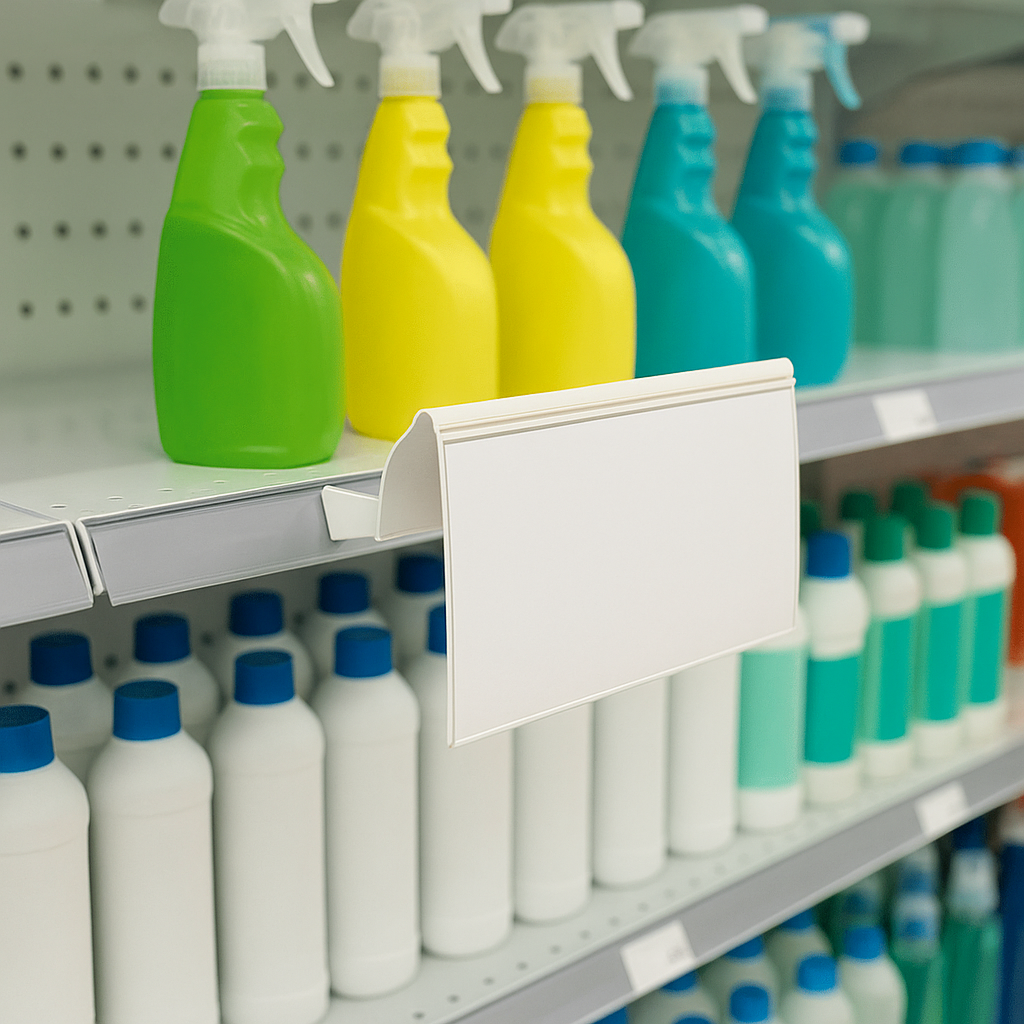
To calculate how many label holders you need for your retail store, multiply the total linear feet of your shelf edges by 12 (to get inches), divide by the holder length, and add a 10% buffer for breakage and future resets. The exact number depends on whether you are outfitting long continuous aisles with long strips or individual product facings with individual clips. Getting this number right prevents both mid-reset shortages and excess inventory tied up in unused stock.
Key Takeaways
- Length-based calculation suits continuous shelf-edge systems: total shelf inches ÷ holder length.
- SKU-based calculation suits individual clips: one holder per facing, plus spares for promotional changes.
- Add a 10% buffer for breakage, loss, and future planogram resets.
- Standard strips are sized to common shelf lengths (e.g., 914 mm strip for a 914 mm shelf), so order pre-cut lengths rather than cutting on site where possible.
Calculating the Number of Label Holders for Your Retail Store

Estimating by Shelf Length for Long Aisles
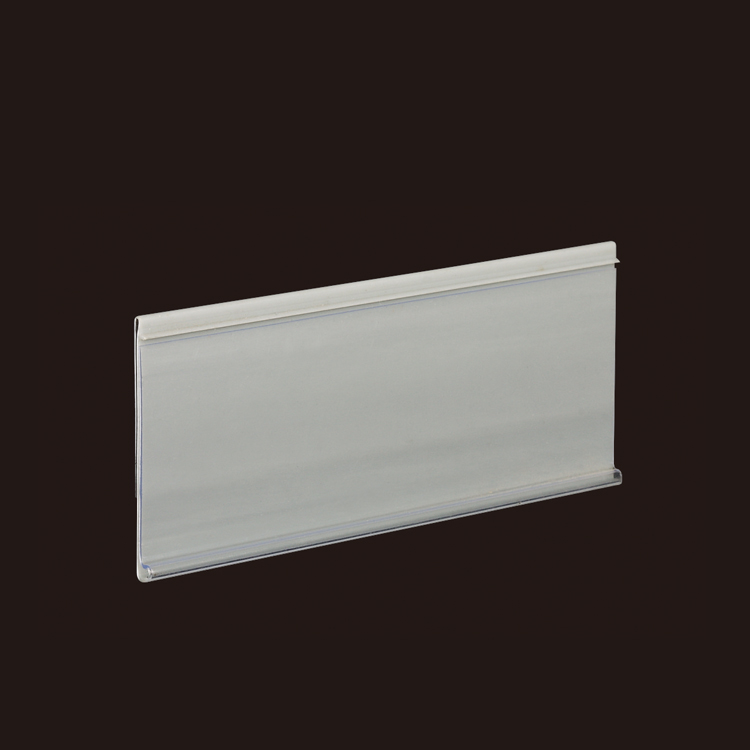
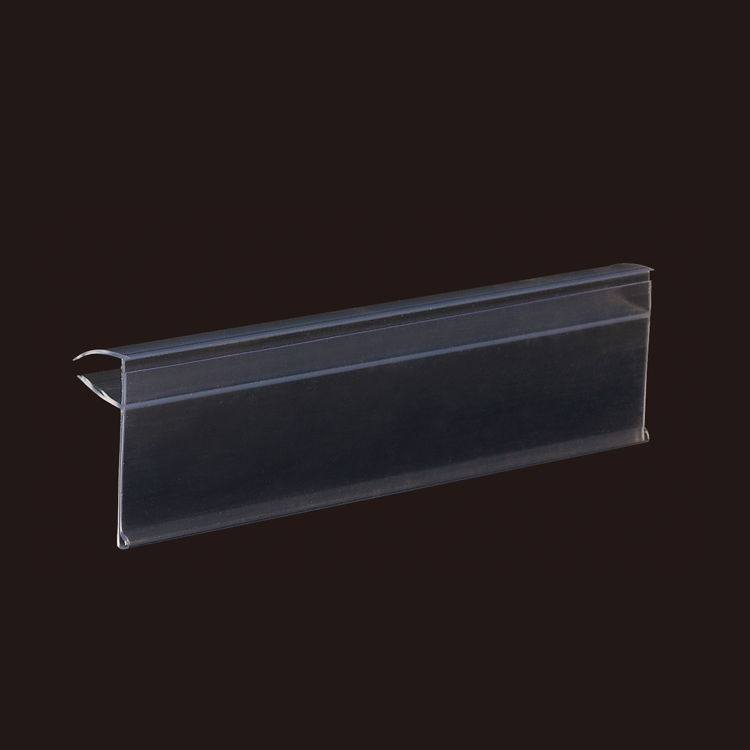
For continuous shelf-edge systems, the calculation is linear. Measure the length of one shelf edge, multiply by the number of shelves in the aisle, and repeat for every aisle. This gives total linear inches of shelf edge. Divide that total by the length of a single holder or strip. For example, a 914 mm (36-inch) shelf takes a 902 mm strip, leaving a small margin at each end. If you have 120 shelves of that length across the store, you need 120 strips of that size, plus buffer.
This method works best when the shelf inventory is uniform. It does not account for corners, uprights, or interrupted runs where a full-length strip cannot be installed. For those areas, measure each segment separately and order shorter lengths or cut-to-fit profiles.
Estimating by SKU and Facings
For individual clips, the calculation is based on product count rather than shelf length. Count the number of facings on each shelf—each facing is one product position and typically takes one holder. Multiply facings per shelf by the number of shelves. This gives the base quantity for standard pricing.
Promotional bays and end caps need additional holders because they change more frequently and often carry larger promotional cards. Add a separate allowance for those areas rather than spreading the buffer across the whole store.
Adding Spares to Your Retail Store Label Holder Order
Accounting for Breakage and Loss
Label holders are exposed to carts, stocking equipment, and cleaning. A small percentage will crack, fall off, or be removed and not replaced. In high-traffic aisles, the loss rate is higher than in back-of-house or low-touch categories. A 10% buffer on the total order covers this attrition without forcing a mid-year reorder for a handful of pieces.
The 10% Buffer Rule for Future Resets
Planograms change. A category reset may require additional holders on a shelf that previously used fewer, or a new promotional bay may need a different holder length. Holding 10% of the total order as unopened stock gives the store flexibility to respond without waiting for a new production run. For multi-store chains, the buffer can be held at the distribution center and allocated as needed.
Choosing the Right Types of Label Holders for Your Retail Store

Bulk Strips for Continuous Shelving
Continuous shelving—standard gondolas, grocery aisles, and pharmacy shelves—is best served by long continuous strips ordered in bulk. Pre-cut lengths matched to standard shelf sizes reduce installation labor and eliminate gaps at bay ends. Bulk orders also hit lower price tiers, so the per-unit cost drops as the total order quantity rises.
Individual Clips for Specialty Displays
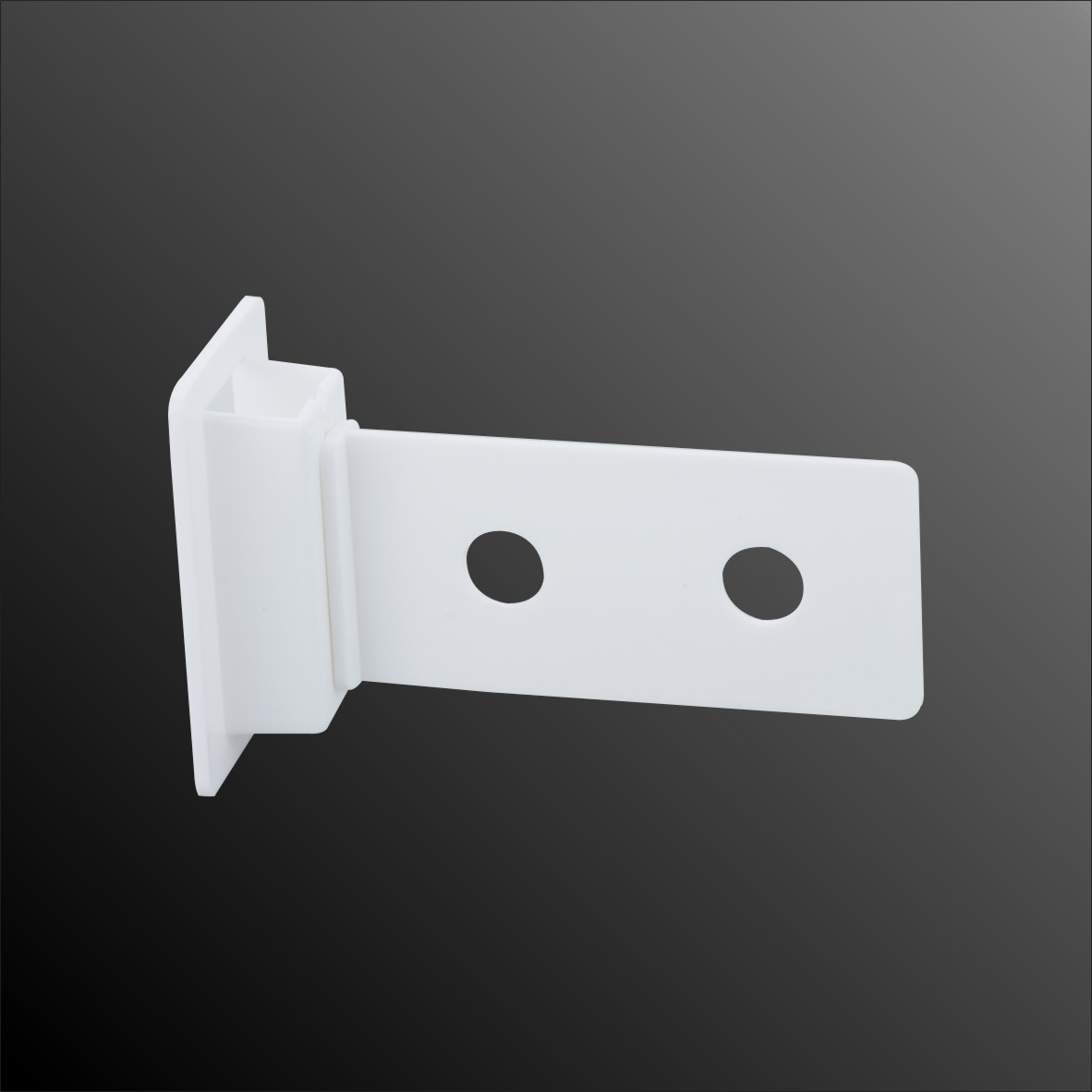
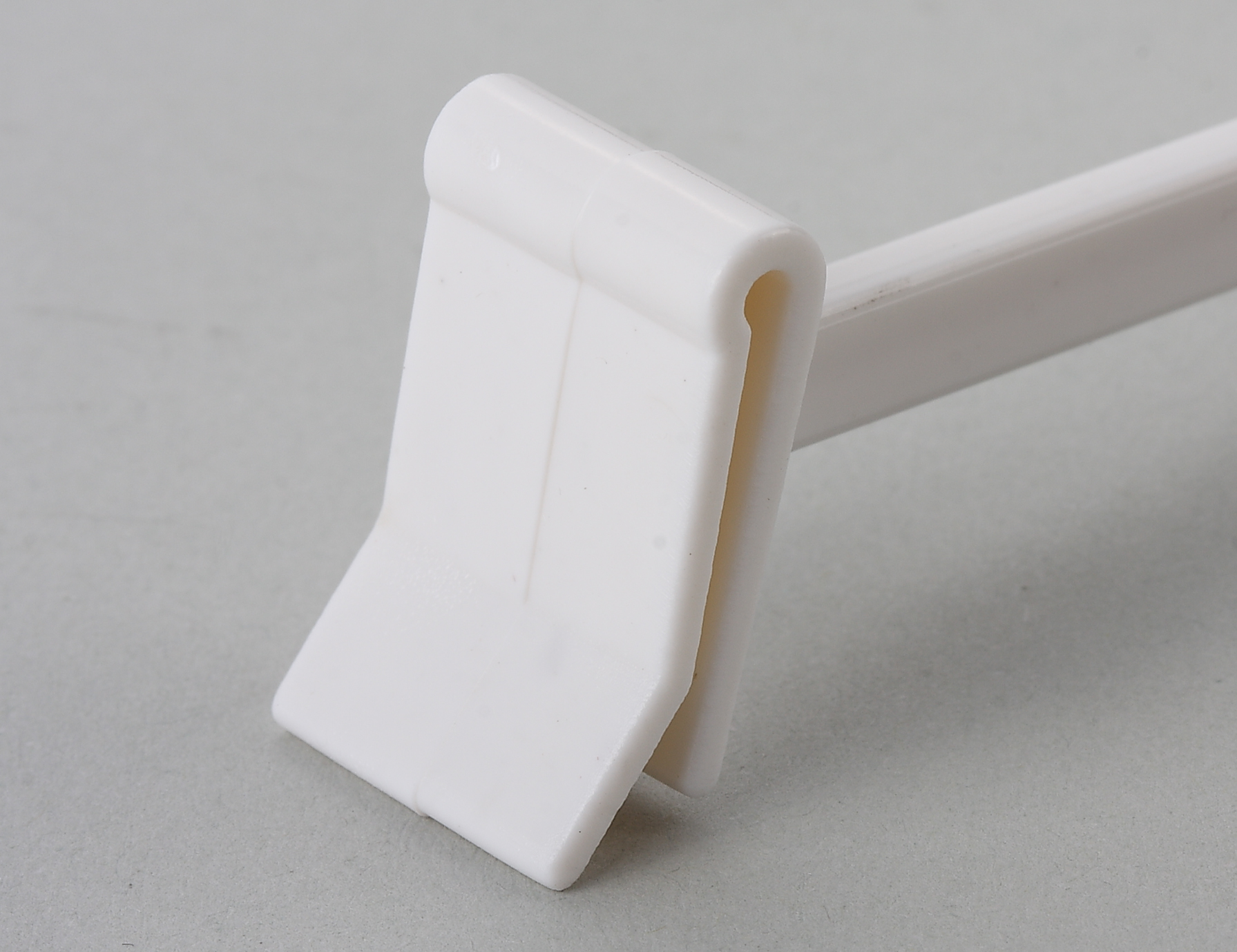
Not every fixture accepts a continuous strip. Wire racks, glass shelves, and curved or interrupted displays need individual clips. If you have standard metal edges, clip-on holders are the most efficient solution. For flat glass cases or cabinet faces, adhesive holders are the direct alternative. Mixing formats in one store is normal; the calculation should be done per fixture type, then summed.
FAQ
How do I measure my shelf edge for strips?
Measure the usable length of the shelf edge, not the full shelf width, and account for uprights and end brackets. Match the strip length to the shelf length where standard sizes exist; otherwise specify cut-to-length strips. A 914 mm shelf typically takes a 902 mm strip to leave clearance at both ends.
Can I mix adhesive and clip-on holders in one store?
Yes. Different fixture types require different mounting methods. Count each fixture type separately and order the matching format. Do not apply a single buffer percentage across mixed formats without checking whether the loss rate differs by area—high-traffic clip-on bays may need a larger buffer.
Do label holders come in standard lengths for bulk buying?
Many profiles are supplied in standard lengths matched to common shelf sizes, such as 587 mm, 902 mm, and 1187 mm for 600 mm, 914 mm, and 1200 mm shelves respectively. Bulk buyers should confirm the standard lengths available for their chosen profile and order those lengths rather than assuming on-site cutting is the cheaper option.