A pegboard plastic hook typically carries 5–15 lb in safe working load, but the published number on a retail display hook is not a universal ceiling. The real limit depends on three interacting variables: the hook design, the panel substrate, and the length of the hook arm. In medium-weight retail applications (15–25 lb), the hook design is often more important to load capacity than the type of pegboard used. For lighter loads, the panel itself is rarely the failure point—the hook is.
Key Takeaways
- Working load vs. failure load: A hook rated for 15 lb may not break until 30 lb, but the working load is the only number safe for repeated retail use.
- Hook design matters more than board type for loads between 15 and 25 lb.
- Leverage reduces capacity: Standard testing measures load at the end of a 6-inch hook; a longer arm exerts more torque on the hole, reducing the safe weight.
- Panel deformation starts around 10–15 lb on standard 1/4-inch pegboard before the hook itself fails.
- Slatwall carries more per point: A typical slatwall double hook is rated at 50 lb, compared to 10–15 lb for a standard pegboard hook.
- IDmate supplies plastic pegboard hooks and slatwall hooks for retail and wholesale buyers, with load figures that depend on hook style and panel specification.
What Pegboard Hook Weight Ratings Actually Measure
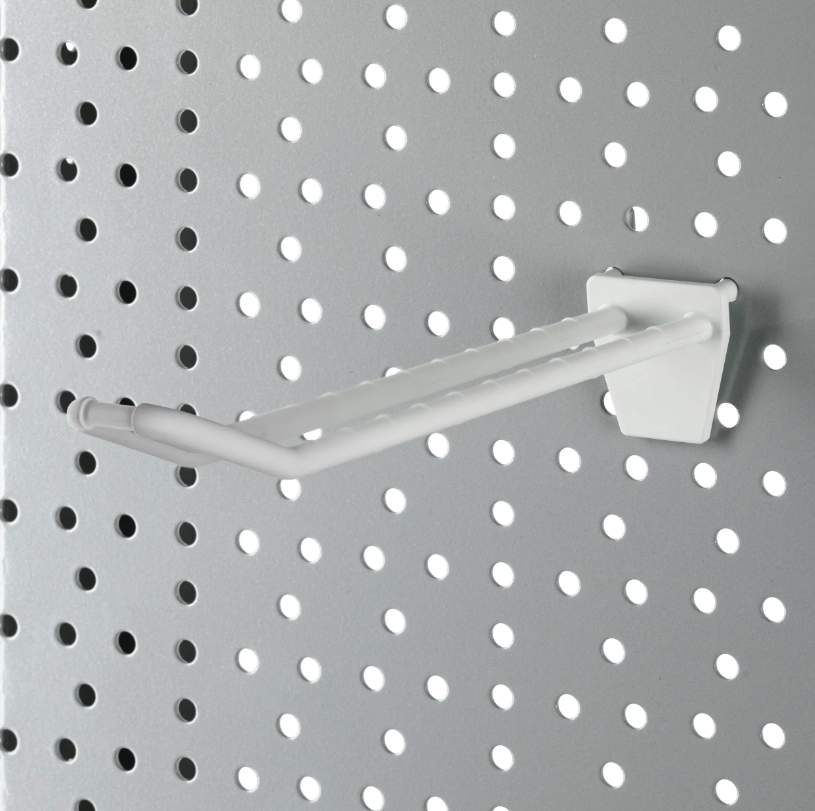
Working Load vs. Maximum Load vs. Breaking Strength
Retail buyers often see three different numbers on a hook spec sheet and assume the highest one is the safe limit. The working load is the recommended load for normal, repeated retail use. The failure load is the point at which the hook or mounting system permanently deforms, disengages, or breaks. A hook with a 1 lb working load limit may advertise a 134 lb maximum load, but that maximum is a static test value, not a daily handling figure.
The practical rule is simple: use the working load, not the maximum. A hook that holds 15 lb in a static test but deforms at 20 lb is not a 15 lb hook for a display that stays up for months under vibration and customer handling.
Why the Panel, Not the Hook, Often Sets the Limit
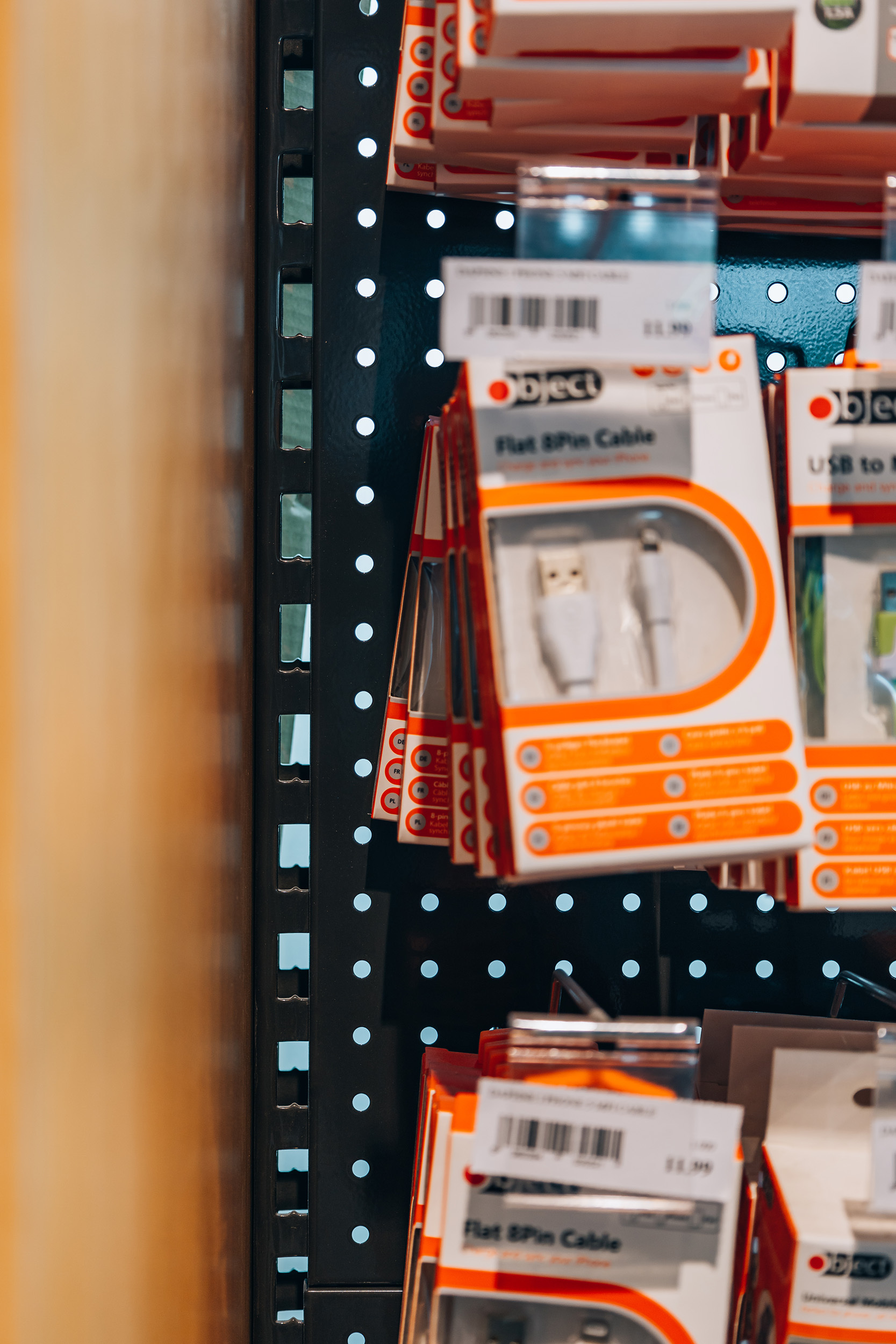
On standard 1/4-inch pegboard, the hook is rarely the first component to fail. The hardboard around the hole begins to deform or tear out at roughly 10–15 lb per hook. The hook may still be intact, but the panel has already lost the grip that keeps the hook seated.
This is why a heavy-duty hook on a standard pegboard panel does not automatically increase the safe load. The panel is the weaker link, and the safe working load is the lower of the two ratings. For any load above the panel’s working limit, the solution is a stronger panel system, not a stronger hook.
How Panel Variables Affect the Pegboard Hook Weight Limit
Board Thickness and Its Impact on Pegboard Hook Weight Limit
Pegboard thickness and material determine how much load the hole edge can take before it deforms. A thin hardboard panel will crush or ovalize the hole under a load that a thicker or reinforced panel would carry without visible damage. In humid environments, hardboard absorbs moisture and weakens further, which reduces the safe load even before the hook is loaded.
The hook cannot compensate for a weak panel. If the board is deforming at 10 lb, a hook rated for 25 lb is irrelevant. The panel sets the ceiling.
Hook Length and Leverage: How It Reduces the Pegboard Hook Weight Limit
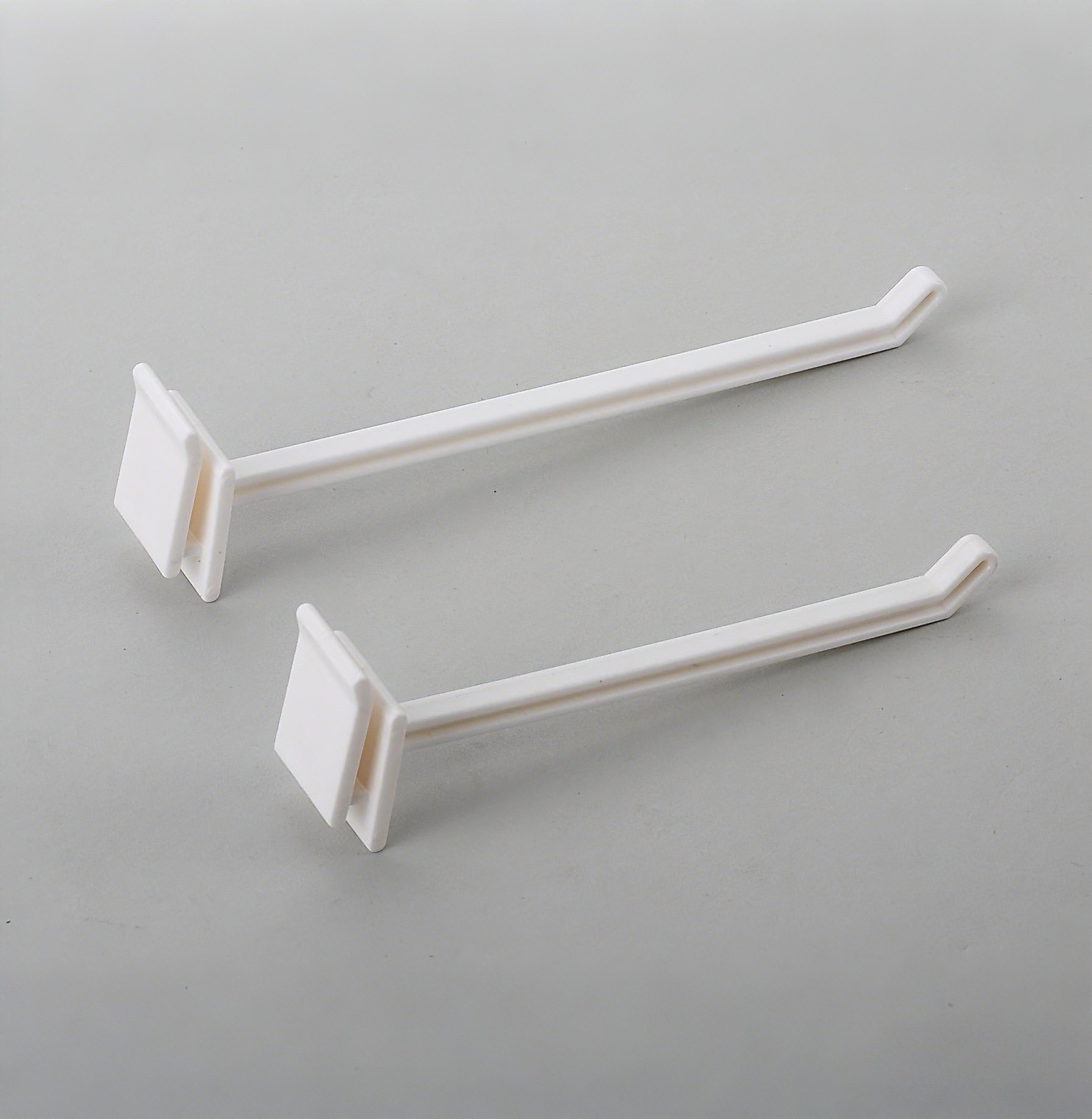
A pegboard hook is a lever. The standard industry test measures load at the end of a 6-inch hook, because that is where torque on the hole is most representative of real use. A shorter hook places the load closer to the panel and reduces the torque at the hole. A longer hook increases the torque and concentrates stress at the top and bottom edges of the hole.
This is why a 6-inch hook carrying 20 lb is not equivalent to a 2-inch hook carrying 20 lb. The longer hook exerts more leverage, and the panel may fail at a lower weight. For heavy products, a shorter hook or a double-prong hook that shares the load across two holes is the safer configuration.
When the Pegboard Hook Weight Limit Is Not Enough
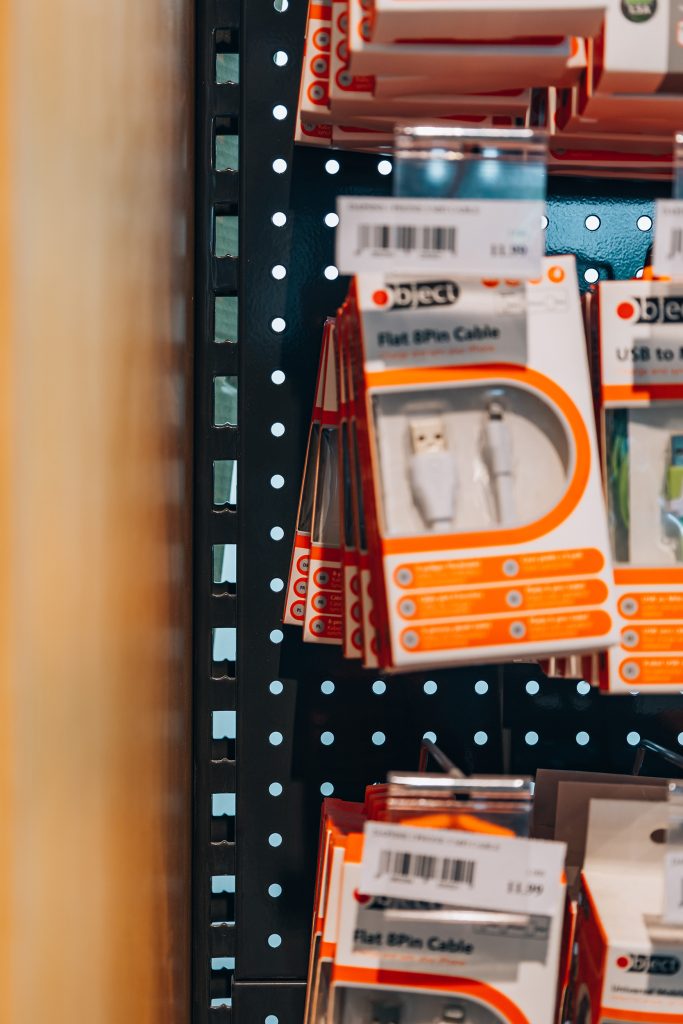
Slatwall and the Groove-Based Load Path
Slatwall distributes load along a continuous groove rather than a single hole. A typical slatwall double hook is rated at 50 lb, and the panel is supported by the groove rather than a thin hole edge. This is a different load path, not just a thicker hook.
If the product weight is consistently above the pegboard panel’s working limit, or if the display needs to hold that weight for months without re-tensioning, slatwall is the more appropriate system. Pegboard remains the right choice for light packaged goods, accessories, and tools where the load stays within the panel’s limit.
IDmate Pegboard and Slatwall Hook Range for Retail and Wholesale
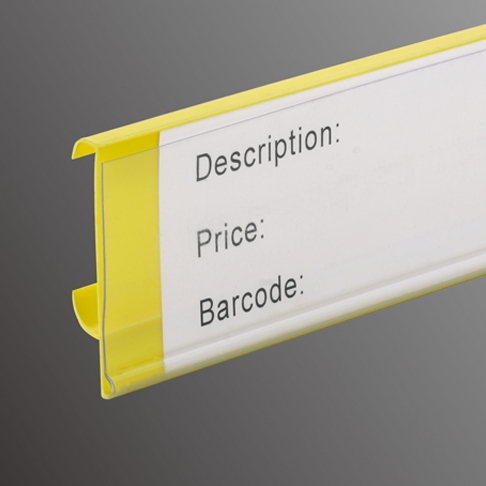
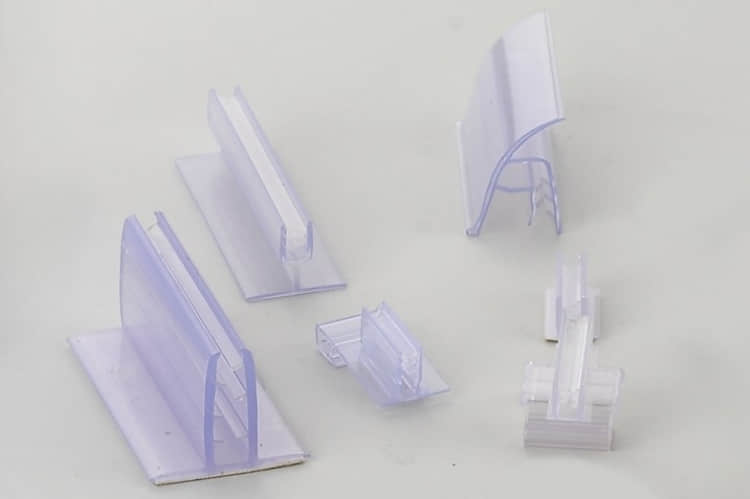
IDmate manufactures plastic hooks for pegboard and slatwall in single-prong, double-prong, and loop styles, with scanner and label-plate options for retail pricing. The pegboard hook range is designed for light-to-medium packaged goods, which matches the working load of standard pegboard panels.
For wholesale buyers, hook length, color, and packaging can be specified against the display plan. Load ratings should be confirmed against both the hook model and the panel specification, because the two ratings work together. A hook rated for 15 lb on a reinforced panel may be limited to 10 lb on a standard hardboard panel.
FAQ
What is the working load of a plastic pegboard hook?
Most plastic pegboard hooks carry roughly 1–15 lb in working load, depending on the hook design and the panel. Light single-prong hooks sit at the low end; heavier or double-prong hooks sit higher. The panel rating may be lower than the hook rating.
Can I hang heavy products on pegboard with two hooks?
Two hooks share the load and reduce the torque at each hole, which improves stability. They do not raise the panel’s total capacity. If the combined product weight is above the panel’s working rating, move to a stronger panel system rather than adding hooks.
Does IDmate supply load-rated hooks for retail displays?
IDmate supplies plastic pegboard hooks and slatwall hooks for retail and warehouse displays, with single-prong, double-prong, and loop options. Load ratings should be confirmed against the specific hook model and the panel specification before a large display rollout.