A pegboard hook fits a flat panel with small round holes, a slatwall hook seats into horizontal grooves, and a gridwall hook clips onto a wire mesh. The difference is not cosmetic. Hole spacing, groove depth, and wire diameter determine which hook will seat securely and how much weight it can carry. IDmate supplies wholesale plastic hooks for all three systems, so the matching logic starts with the panel, not the hook.
Key Takeaways
- Pegboard hooks fit 1/8-inch or 1/4-inch holes with 1-inch spacing; typical plastic hook capacity is in the light-to-medium range.
- Slatwall hooks fit 3-inch on-center grooves, the standard for retail slatwall; actual capacity depends on panel material, not the hook alone.
- Gridwall hooks fit 3 × 3-inch wire mesh and are common for temporary and mobile displays.
- A hook that fits one panel type will not seat correctly on another. Match the backing to the panel before ordering.
- IDmate’s plastic hooks range covers pegboard, slatwall, gridwall, and corrugated display panels.
Pegboard Hooks: Standard Hole Spacing and Load Limits
1/8-inch and 1/4-inch Hole Diameters
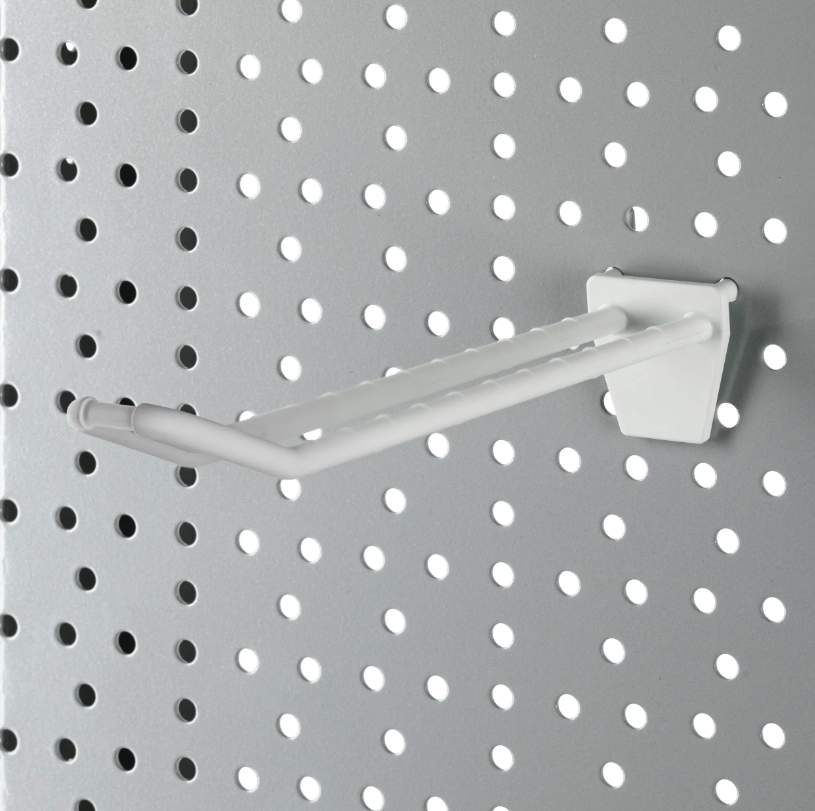
Pegboard is the most common flat panel in retail, workshops, and garages. Standard pegboard uses either 1/8-inch (3 mm) or 1/4-inch (6 mm) holes, usually on 1-inch centers. A pegboard hook has a straight or angled pin that pushes into the hole and a prong that holds the product. Plastic pegboard hooks are non-corrosive and will not scratch the panel face.
The load limit matters. A typical plastic pegboard hook is designed for packaged goods, small tools, and lightweight accessories. Heavy metal parts need a thicker hook or a different panel system.
When Pegboard Hooks Work Best
Pegboard is the right choice when the display is flat, the products are light to medium weight, and the layout changes occasionally. It is common in convenience stores, hardware sections, and back-of-house tool areas. If the products are heavier or the panel is wire, slatwall or gridwall is the better starting point.
Slatwall Hooks: Groove Spacing and Weight Capacity
3-inch Standard Groove Centers
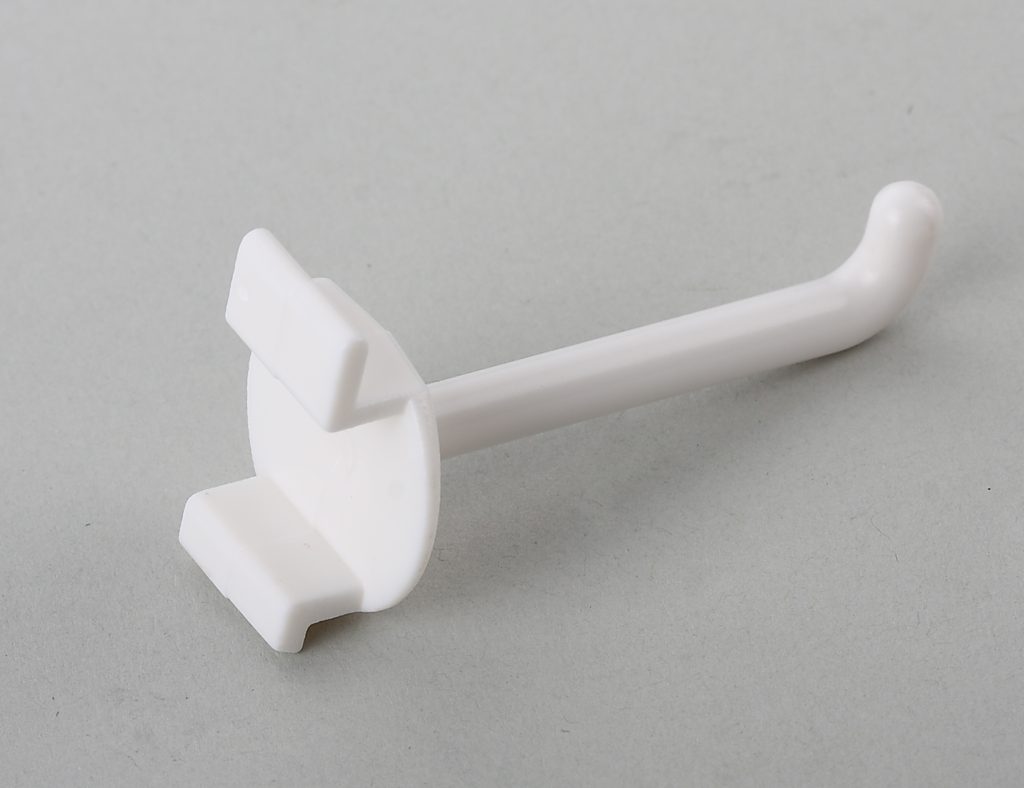
Slatwall panels have horizontal grooves, most commonly spaced 3 inches on center. A slatwall hook has a backplate or L-shaped insert that drops into the groove and locks against the panel face. The hook can be single-prong or double-prong, and some designs include a label plate for price tags.
Slatwall is more flexible than pegboard because the hook can slide along the groove without removing it. That makes it easier to reset a display or change product spacing. The trade-off is that the hook must match the groove profile. A hook designed for a 3-inch panel will not seat correctly on a 1-inch or 6-inch system.
Backplate vs. J-Hook Insert
Two backing styles dominate. A flat backplate distributes load across the panel face and is more stable for heavier items. A J-hook insert relies on the groove lip and is faster to reposition. For retail shelves that carry bottled goods or boxed products, the backplate style is the safer choice.
Actual weight capacity depends on the panel, not just the hook. An MDF slatwall panel without metal inserts may support only 10–15 lbs per bracket, while a panel with aluminum inserts can support 50–60 lbs. The hook is only one part of the load path.
Gridwall Hooks: Wire Mesh Geometry and Reconfiguration
3 × 3-inch Mesh and Hook Fit
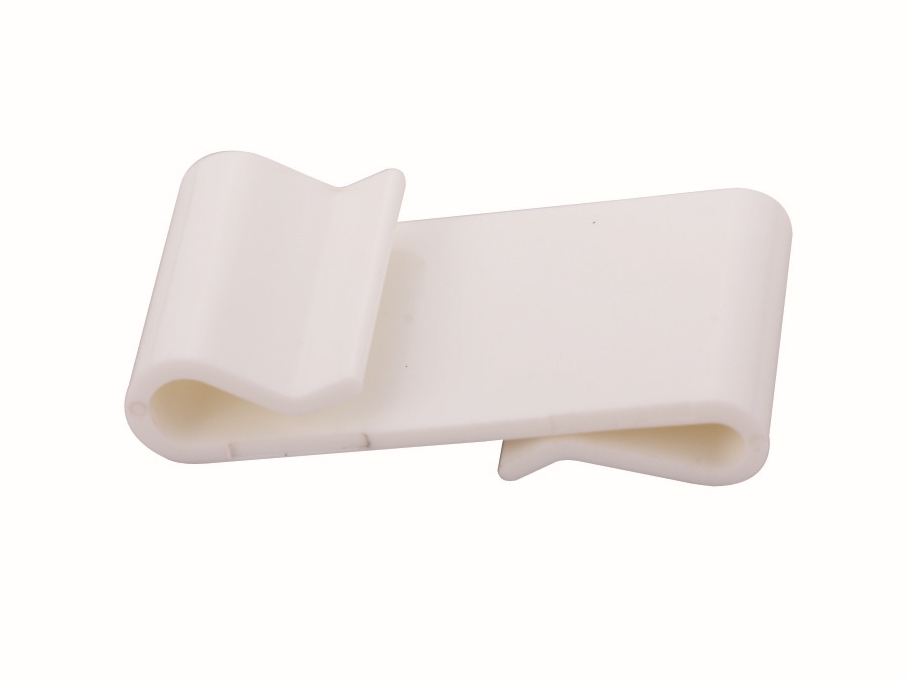
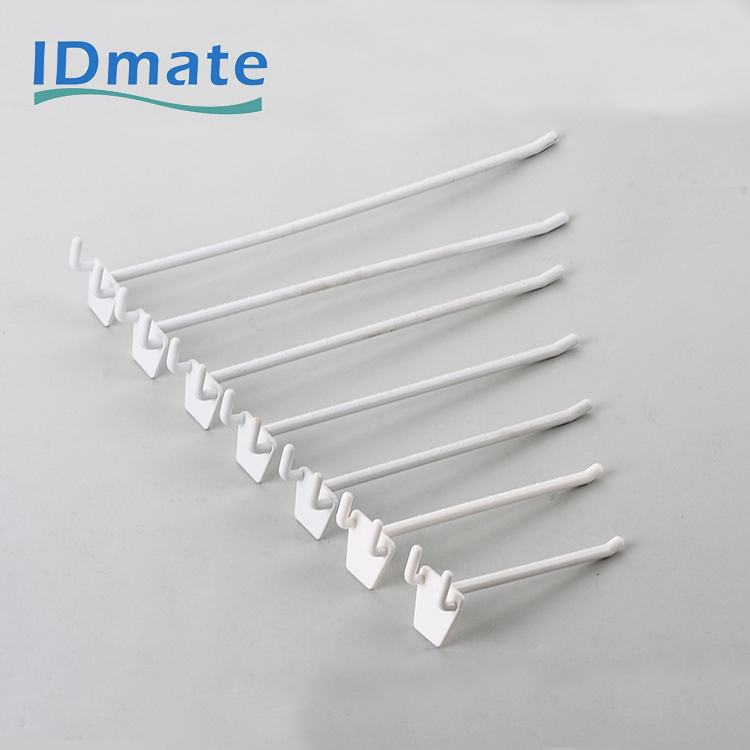
Gridwall is a wire mesh panel with 3 × 3-inch squares. A gridwall hook has a deep back clip that snaps onto the wire, often with a notch or double-wire grip to prevent rotation. Because the panel is open mesh, gridwall hooks are visible from both sides, which suits displays where the back of the fixture is also seen.
Gridwall is lighter than slatwall and easier to move. That makes it common for trade shows, pop-up shops, and temporary promotional areas. The hook capacity is generally lower than a reinforced slatwall system, so it is best for apparel accessories, small packaged goods, and hanging cards rather than heavy hardware.
Pop-Up and Trade Show Applications
For temporary displays, the priority is speed. Gridwall hooks clip on without tools, and the panel itself can be folded or moved between locations. A plastic gridwall hook will not rust if the display is stored in a damp trailer or outdoor tent, which is an advantage over metal hooks in mobile setups.
How to Match Hooks to Your Display Wall
Three Questions Before Ordering
- What is the panel? Measure the hole diameter and spacing for pegboard, the groove spacing for slatwall, and the wire spacing for gridwall.
- What is the product weight? Match the hook and panel together. A heavy product on a light-duty panel is a failure waiting to happen, regardless of the hook.
- Will the layout change? Slatwall and gridwall allow faster repositioning than pegboard. If the display resets often, prioritize the system that moves without tools.
IDmate Wholesale Hook Options
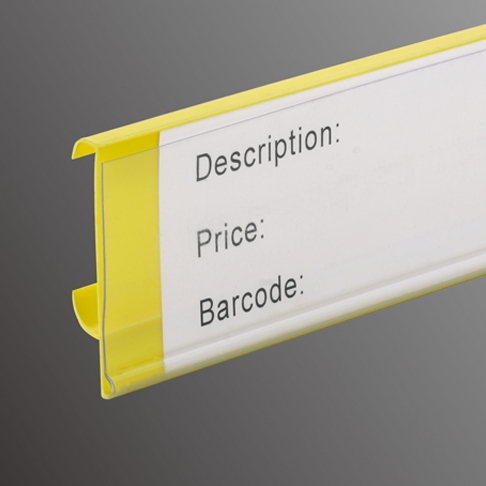
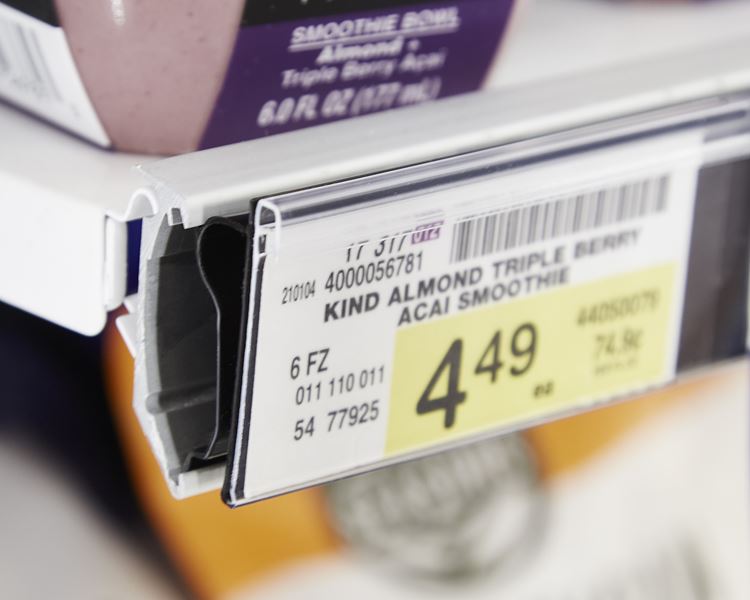
IDmate manufactures plastic hooks for pegboard, slatwall, gridwall, and corrugated displays. The range includes single-prong, double-prong, loop, and scanner hooks with label plates. For wholesale buyers, custom colors and lengths are available, and MOQ terms can be confirmed against the specific hook style. The same panel-matching logic applies across the range: identify the panel first, then select the hook that seats into it.
FAQ
Can pegboard hooks be used on slatwall?
No. Pegboard hooks seat into round holes, while slatwall hooks seat into horizontal grooves. The backing geometry is different, and a pegboard hook will not lock securely in a slatwall groove. Use a dedicated slatwall hook for slatwall panels.
Which hook type holds the most weight?
It depends on the panel as much as the hook. A slatwall panel with aluminum inserts can support far more than a standard pegboard panel. A pegboard plastic hook is typically rated for light to medium packaged goods. For heavier products, confirm the panel’s load rating before choosing the hook.
How do I know which panel I have?
Measure the hole diameter and spacing for pegboard, the groove spacing for slatwall, and the wire spacing for gridwall. Standard pegboard uses 1/8-inch or 1/4-inch holes on 1-inch centers. Standard slatwall grooves are 3 inches on center. Gridwall mesh is typically 3 × 3 inches.
Does IDmate supply hooks for all three panel types?
Yes. IDmate’s plastic hooks range covers pegboard, slatwall, gridwall, and corrugated display panels, with single-prong, double-prong, loop, and scanner hook options for wholesale buyers.