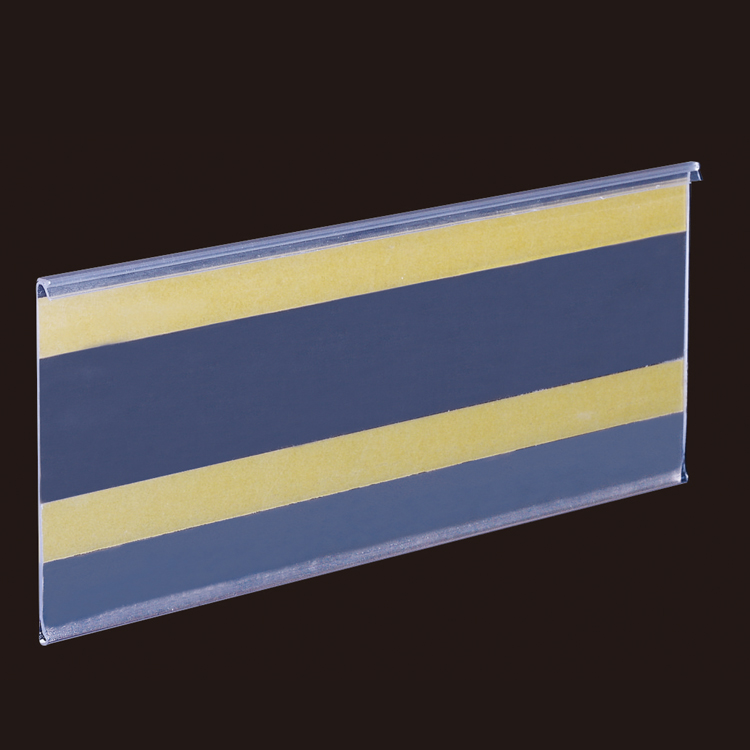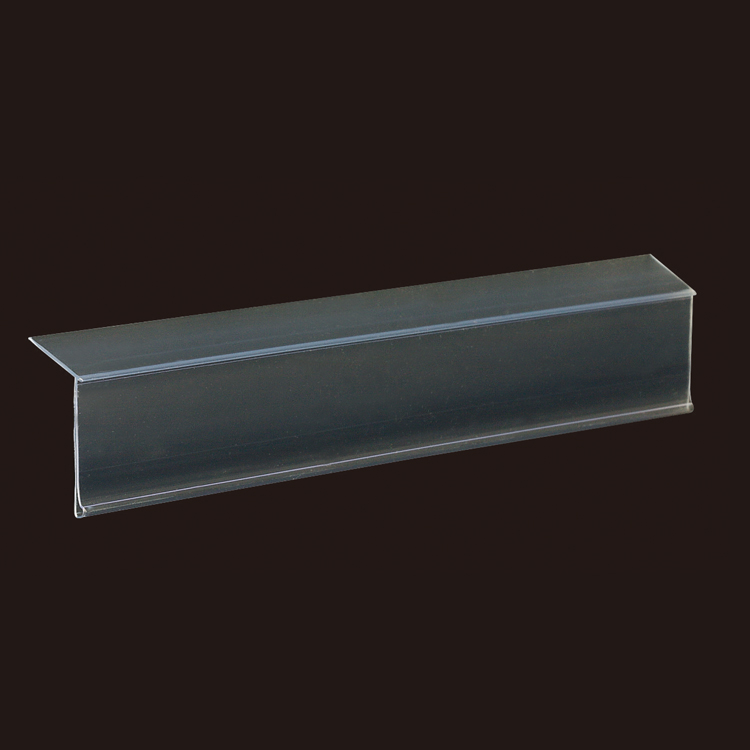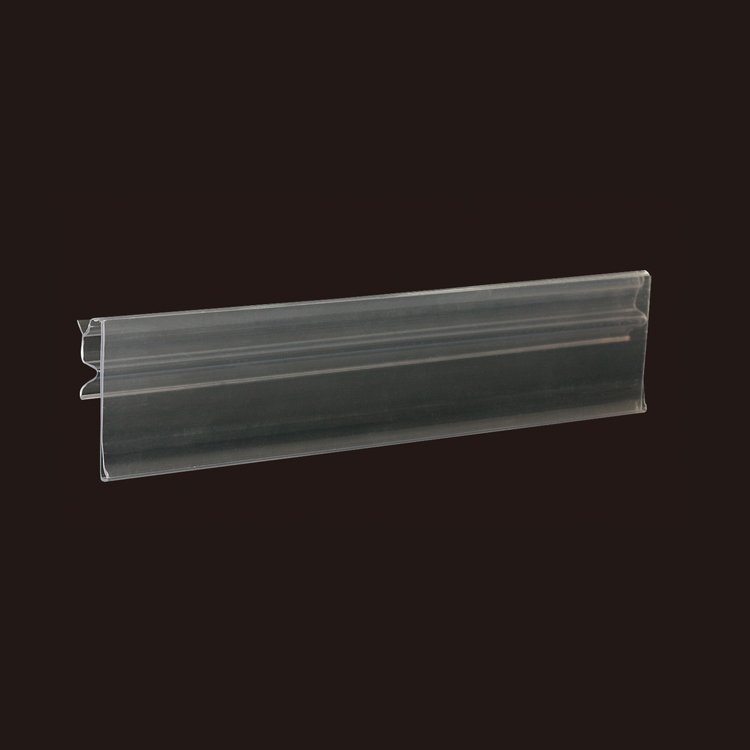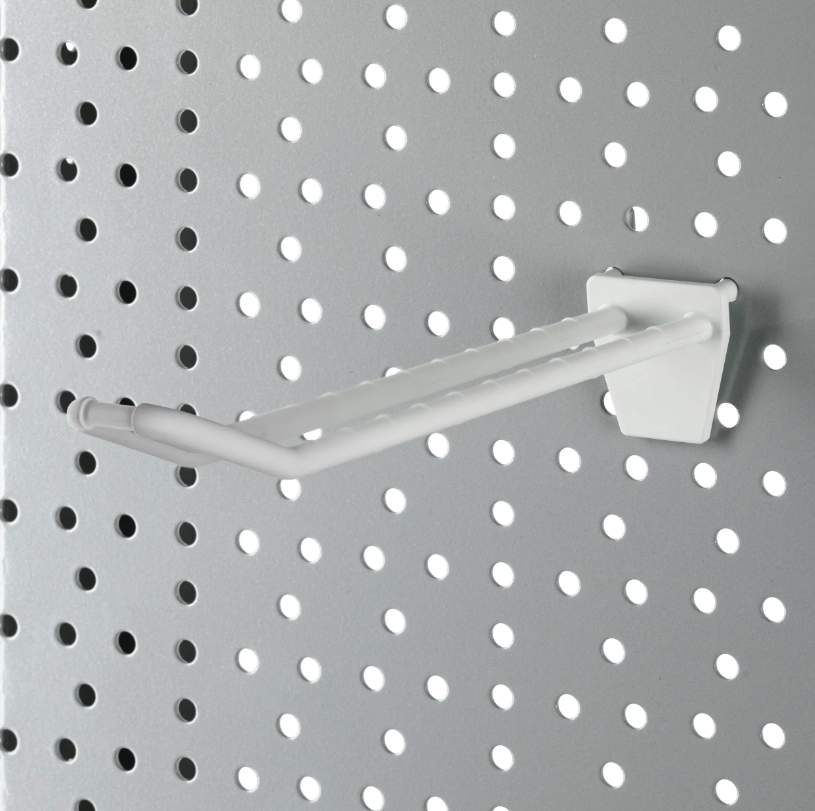
A data strip should be chosen in three steps: identify the shelf material and edge profile, select the mounting style that seats into that edge, and then confirm the insert height against your price tag. The most common insert heights are 26 mm, 39 mm, and 52 mm; the most common mounting styles are clip-on, self-adhesive, and hanging. A strip that mounts correctly but is the wrong height will hold the tag loosely or fail to scan. IDmate supplies wholesale data strips in multiple profiles for retail, supermarket, and warehouse shelving.
Key Takeaways
- Choose by shelf type first: clip-on for standard metal and wood edges, self-adhesive for flat faces, hanging for wire racks.
- Insert heights of 26 mm, 39 mm, and 52 mm cover most retail price tags and promotional cards.
- Measure the shelf edge depth and the bay length before ordering; strips can be cut or specified in custom lengths.
- PVC is the standard material for clarity and toughness; PETG is an option for higher clarity or cold environments.
- IDmate’s data strips range includes clip-on, self-adhesive, hanging, and magnetic mounting styles.
What Does a Data Strip Do at the Shelf Edge?
Holding Price Tags, Barcodes, and Promotional Cards
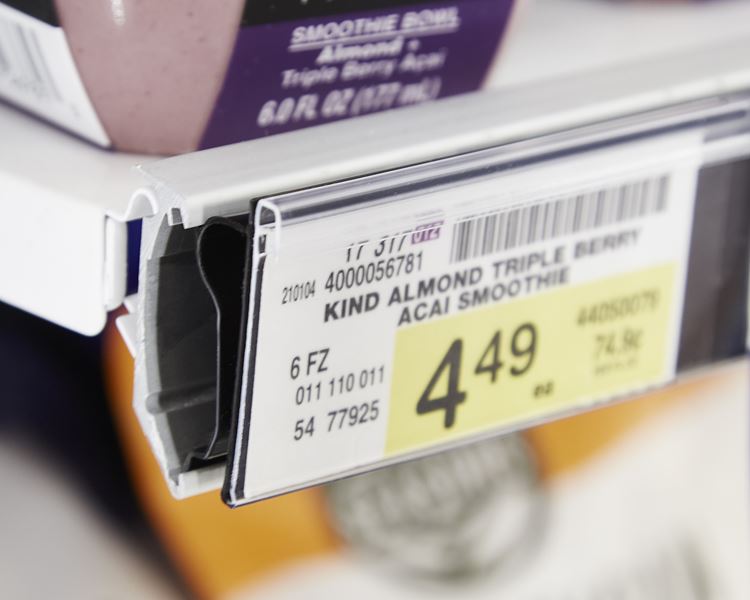
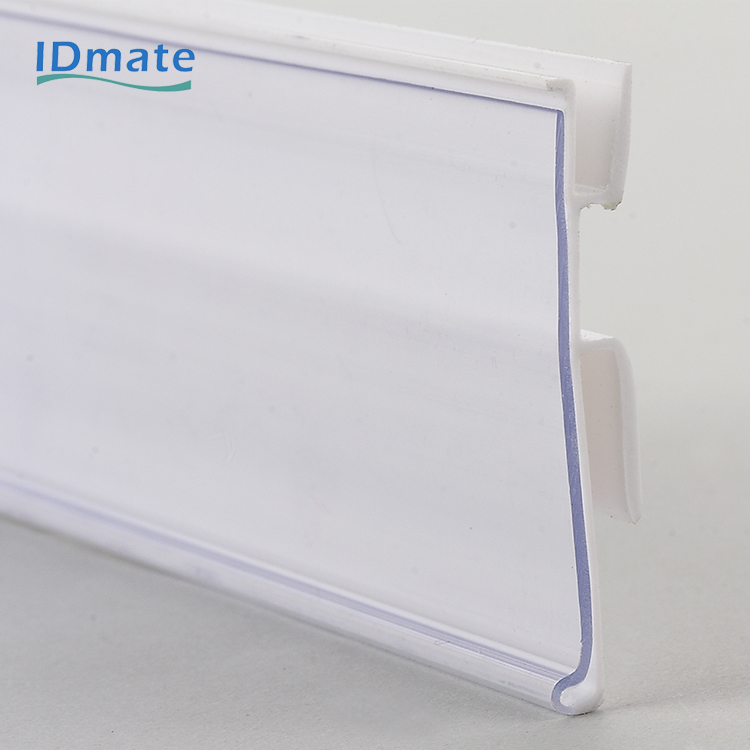
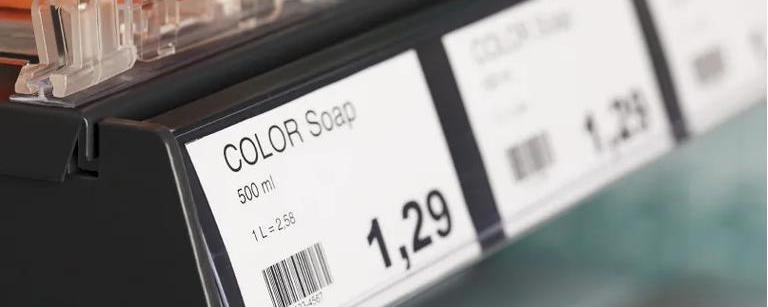
A data strip is a plastic channel that runs along the shelf edge and holds a printed card. The card can be a price tag, a barcode, a product name, or a promotional message. The strip keeps the card aligned and visible, and it allows staff to swap the card without removing adhesive or replacing the entire label.
Protecting Labels from Moisture and Abrasion
A printed card on an open shelf is exposed to dust, spills, and handling. The clear window of a data strip protects the card and keeps the barcode readable. In a refrigerated case, the window also reduces condensation on the printed surface, which is important for scanning at checkout.
How to Match Data Strip Mounting Style to Your Shelving
Clip-On Data Strips for Standard Metal and Wire Shelves
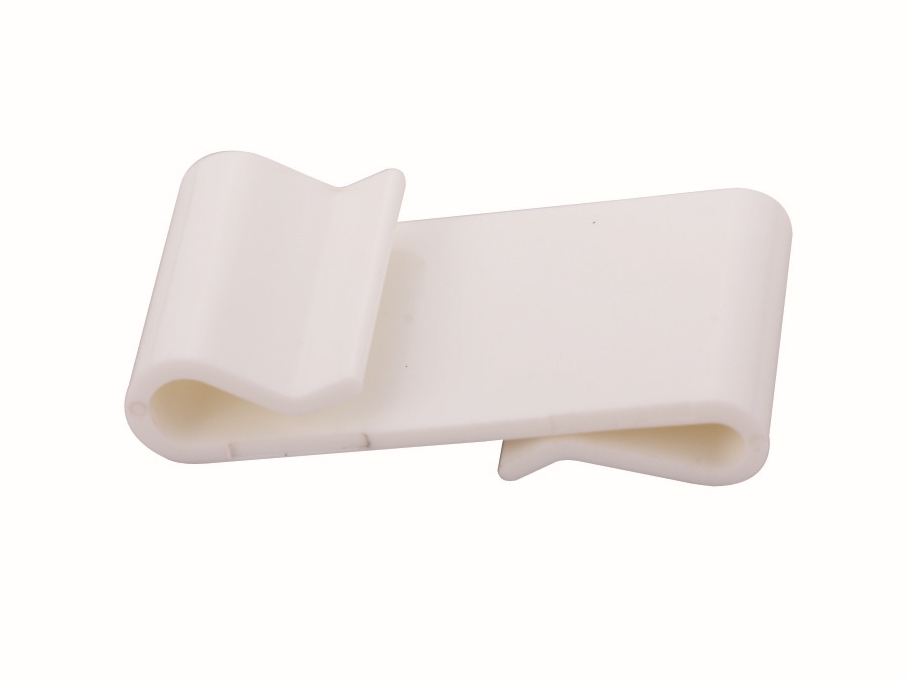
A clip-on shelf label holder grips the shelf edge without adhesive. It is the standard choice for metal gondolas and wood shelves where residue is a concern. Clip-on strips can be repositioned, which suits stores that reset planograms or move promotional displays. A C-channel profile grips more tightly than a simple clip and is better for busy supermarket shelves.
Self-Adhesive Data Strips for Wood, Glass, and Flat Surfaces
A self-adhesive label holder uses a peel-and-stick backing for flat surfaces that have no lip to clip onto. It is common on glass display cases, cabinet fronts, and warehouse beams. Self-adhesive strips are available in flat and angled profiles; the angled version tilts the tag toward the shopper, which improves readability on lower shelves.
Hanging Data Strips for Wire Racks and Refrigerated Cases
Wire shelves and baskets have no continuous edge for a clip. A hanging label holder attaches to the wire or to the front of the basket and holds the tag in a visible position. These are common in produce sections, convenience-store baskets, and refrigerated displays. The hanging format keeps the tag stable without requiring a flat mounting surface.
How to Choose Data Strip Height and Length
Common Insert Heights: 26 mm, 39 mm, and 52 mm
Insert height is the dimension that determines which card the strip will hold. 26 mm is the narrow profile for compact price tags. 39 mm is the most common middle size, large enough for a barcode and a price. 52 mm is the tall profile for promotional cards or multiple lines of information. Choose the height that matches the printed card, not the shelf edge.
Measuring Shelf Edge Depth and Bay Length Before Ordering
Two measurements prevent most ordering errors. First, measure the shelf edge depth (the vertical face where the strip will sit) to confirm the clip or adhesive will fit. Second, measure the bay length so the strip can be cut to the correct length. Standard strips are supplied in fixed lengths or coils; custom lengths reduce waste and eliminate gaps at the ends of a bay.
Material and Environment Considerations
PVC vs. PETG for Clarity and Durability
PVC is the standard material for data strips. It is clear, tough, and resistant to yellowing under normal retail lighting. PETG is an alternative for higher clarity or for environments where PVC may become brittle, such as cold storage. Both materials accept printed inserts, but PETG is more impact-resistant at low temperatures.
Cold Storage and High-Turnover Pricing Environments
In a refrigerated case, condensation is the main challenge. A strip with a sealed window reduces moisture reaching the card. In a high-turnover pricing environment, a clip-on or self-adhesive strip that allows a two-second card swap saves labor across hundreds of SKUs. The mounting style should follow the workflow: if prices change daily, prioritize swap speed; if the display is permanent, prioritize bond strength.
FAQs About Choosing Data Strips
How do I measure my shelf edge for a data strip?
Measure the vertical depth of the shelf edge and the length of the bay. Confirm the insert height against your printed card: 26 mm, 39 mm, or 52 mm. A sample strip is the most reliable way to confirm fit before a bulk order.
Can I cut a data strip to a custom length?
Standard strips can be cut on site, but a clean edge is important for appearance and card retention. For large projects, specify the bay length at the time of order to receive pre-cut strips and avoid waste.
Does IDmate supply wholesale data strips in multiple profiles?
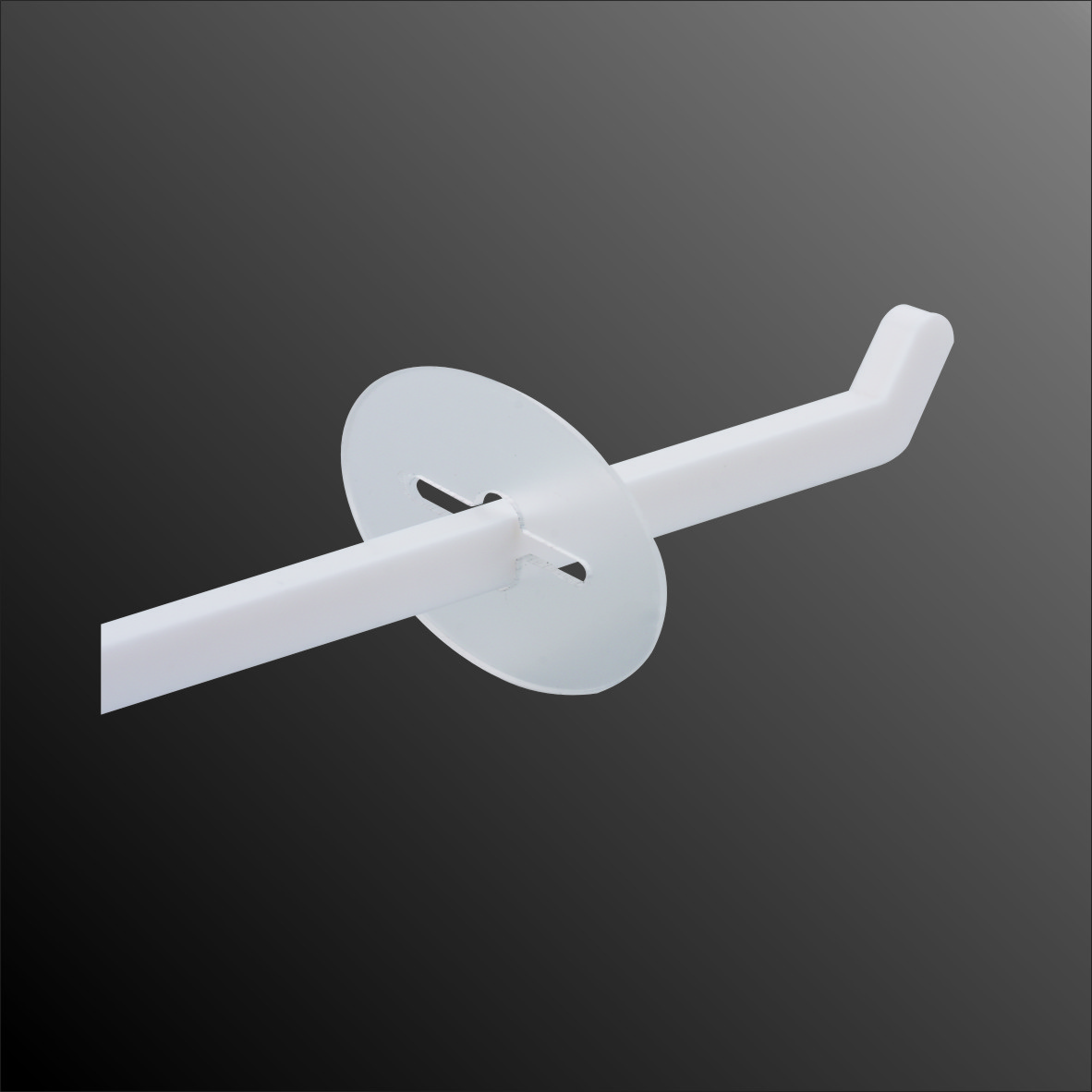
Yes. IDmate supplies clip-on, self-adhesive, hanging, and magnetic data strips in multiple insert heights and custom lengths. Wholesale orders can combine data strips with plastic hooks and sign holders for a complete shelf-edge package.