
Shelf edge pricing refers to the price displayed on the shelf edge using data strips or other label holders, allowing customers to see the cost of a product at the point of decision. It is one of the most fundamental elements of retail operations, yet it is often overlooked until a pricing error causes a dispute at checkout. This guide explains what shelf edge pricing is, how it is displayed, how to choose the right label holders, and how to maintain accuracy.
Key Takeaways
- Shelf edge pricing is the price shown on the shelf edge, directly below or beside the product.
- Accurate shelf edge pricing builds customer trust and reduces checkout disputes.
- Data strips, clip-on holders, and self-adhesive holders are the primary display methods.
- Choosing the right holder depends on shelf material, environment, and update frequency.
- For wholesale and custom solutions, work with a manufacturer like IDmate.
What Is Shelf Edge Pricing and Why It Matters for Retailers
Definition: The Price Displayed at the Point of Sale
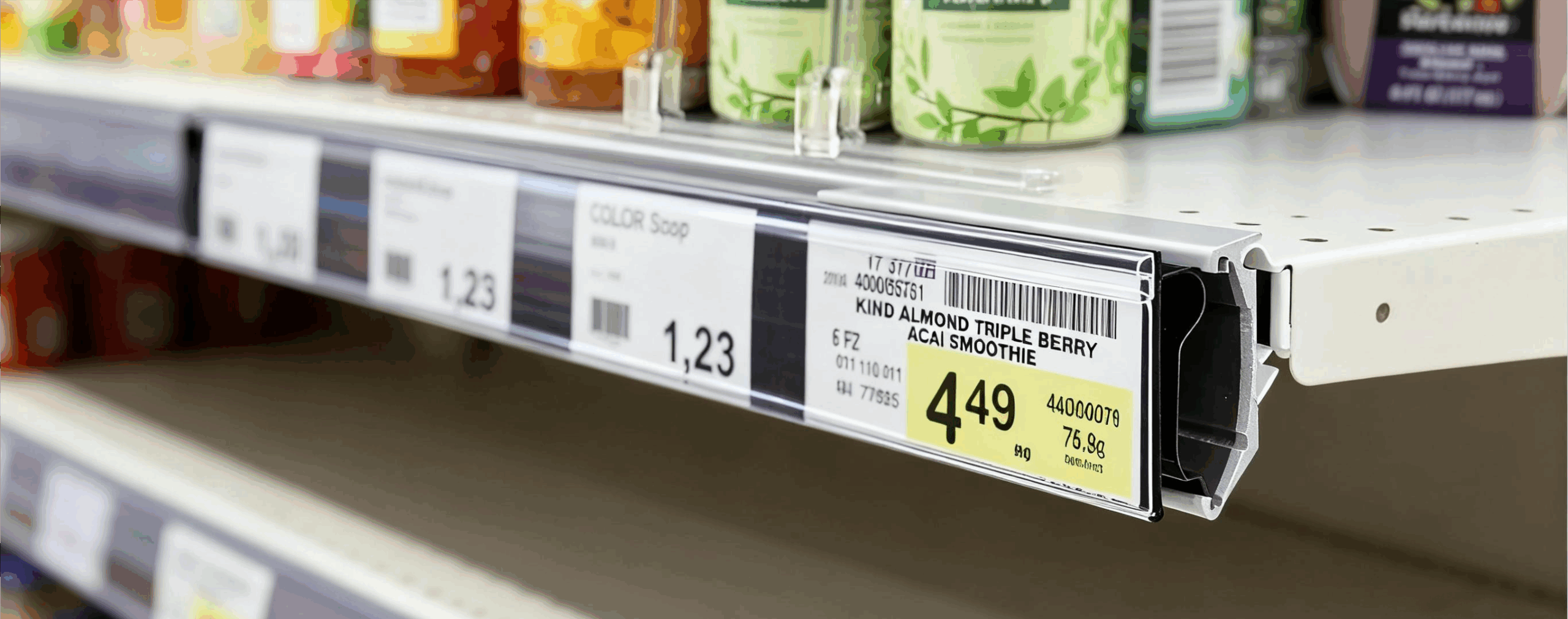
Shelf edge pricing is the practice of displaying a product’s price on the shelf edge, typically using a paper or plastic label inserted into a holder. The holder is attached to the front channel of the shelf, and the label faces the shopper. This is distinct from the price stored in the POS system, although the two must match to avoid customer complaints. The shelf edge is where the purchase decision happens, which is why accurate pricing at this location is critical.
Why Accurate Shelf Edge Pricing Builds Customer Trust
When a customer sees one price on the shelf and a different price at checkout, trust is broken. Even a small discrepancy can lead to a refund, a complaint, or a lost customer. Consistent shelf edge pricing signals that the retailer is organized and honest. It also reduces the time staff spend resolving price disputes. For chain stores, standardized shelf edge pricing across all locations ensures a consistent customer experience.
Legal Requirements for Unit Pricing on Shelf Edge Labels
In many regions, retailers are legally required to display unit pricing—the price per ounce, pound, or liter—on the shelf edge. This allows customers to compare products of different sizes fairly. The specific requirements vary by country and state, but the principle is the same: the shelf edge must show enough information for the customer to make an informed decision. Data strips and label holders must be sized to accommodate both the retail price and the unit price.
How Shelf Edge Pricing Is Displayed: Data Strips and Label Holders
Data Strips: The Standard Carrier for Price Labels
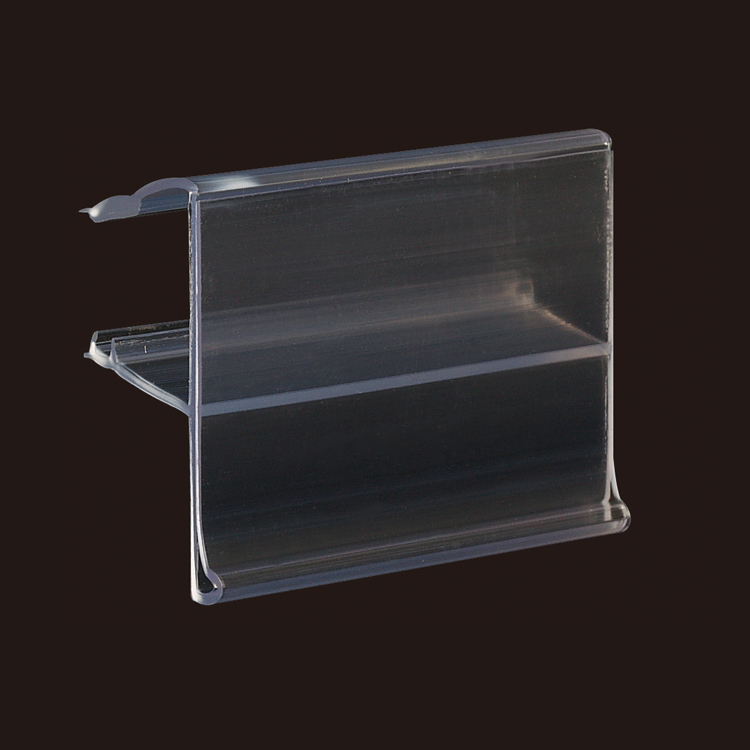
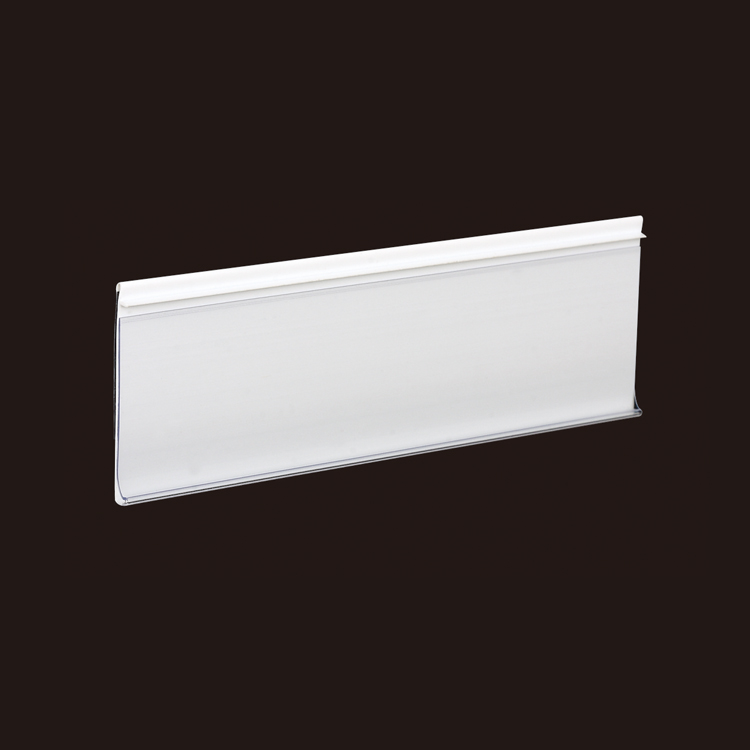
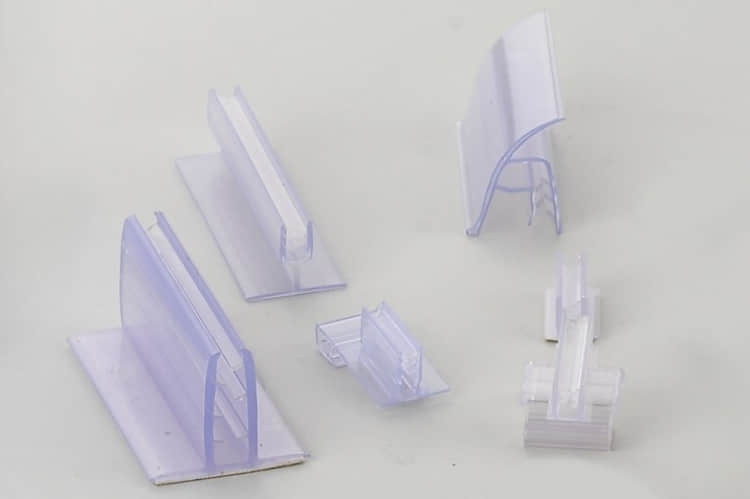
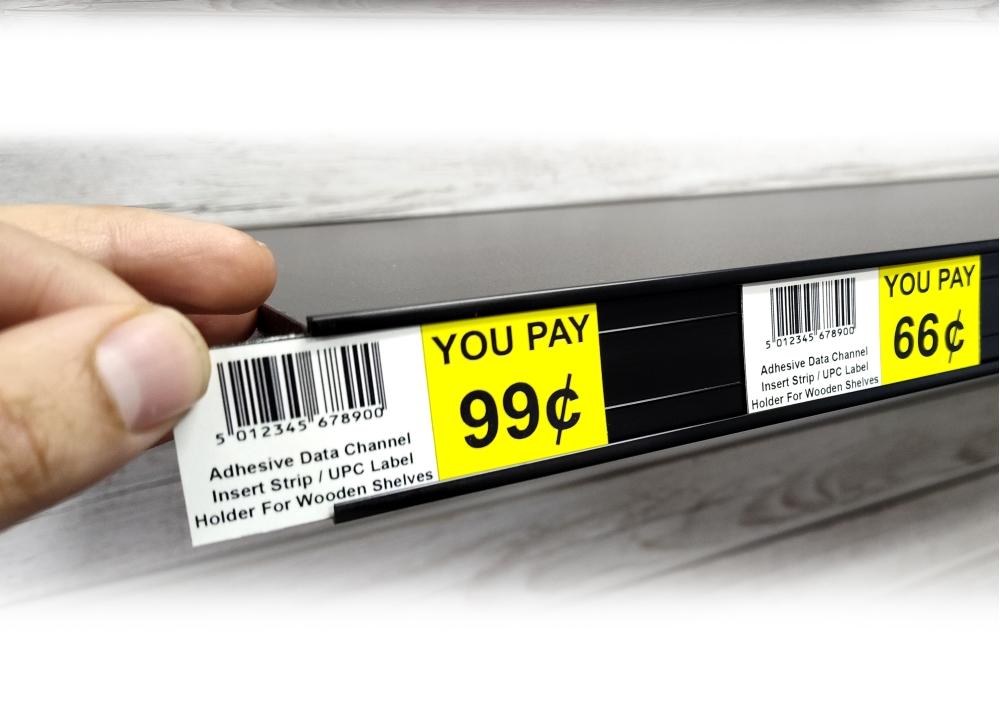
A data strip is a long plastic holder that runs along the front edge of the shelf. It holds paper labels that display the price, barcode, and product details. Data strips are the most common method for shelf edge pricing because they are durable, easy to update, and compatible with most shelving systems. They are available in standard heights such as 26 mm, 39 mm, and 40 mm. For stores that need to update prices frequently, data strips allow staff to slide out old labels and insert new ones in seconds.
Clip-On and Self-Adhesive Label Holders for Different Shelf Types
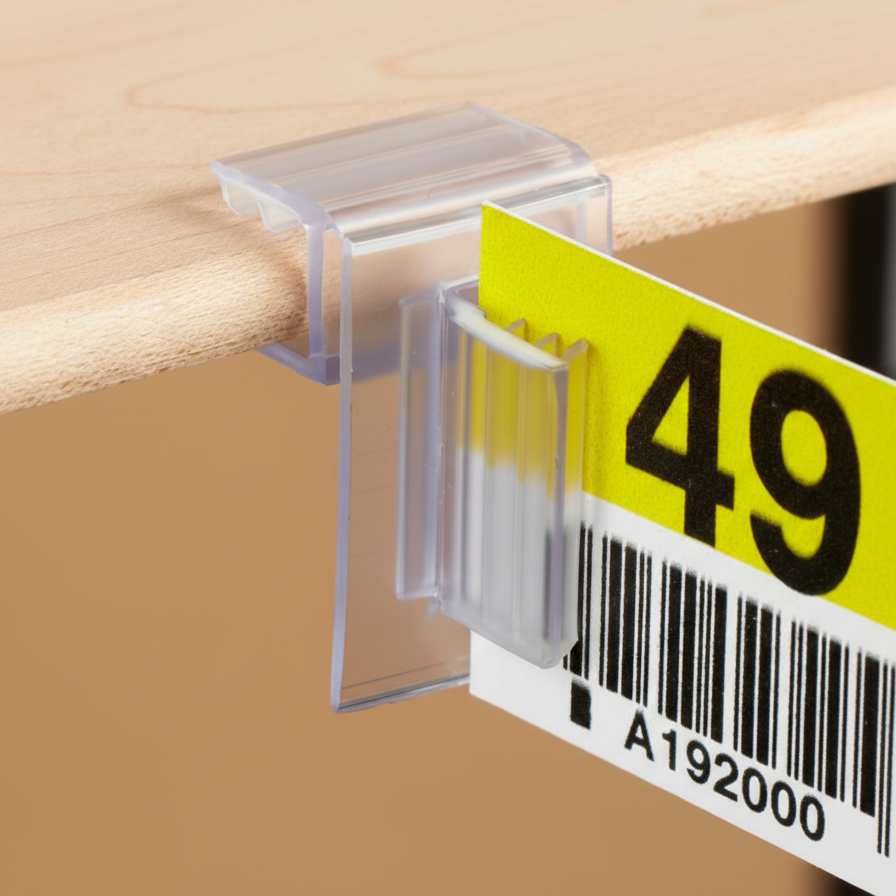
Not all shelves accept a standard data strip. For shelves without a front channel, clip-on shelf label holders grip the shelf edge directly. They are reusable and leave no residue. For smooth surfaces like glass or laminate, self-adhesive label holders provide a peel-and-stick solution. Both types hold the price label securely while allowing quick changes. The choice depends on the shelf material and how often prices change.
Specialty Holders for Wire Shelves and Refrigerated Displays
Wire shelving and refrigerated cases require different holders. For wire shelves, a wrap-around clip or a gripper sign holder can secure the label without adhesive. For refrigerated displays, choose a holder with a cold-resistant adhesive or a magnetic backing if the shelf is metal. Standard paper labels may curl in humid environments, so plastic holders with clear covers are preferred for cold cases.
How to Choose and Implement Shelf Edge Pricing
Match Label Holders to Shelf Material and Environment
The first step is to identify your shelf material. Metal shelves accept magnetic or clip-on holders. Wood shelves work with adhesive or clip-on holders. Glass shelves need adhesive holders. Wire shelves require wrap-around clips. For refrigerated sections, choose cold-resistant materials. For high-traffic aisles, choose thicker PVC or acrylic holders that resist bending. Matching the holder to the environment prevents peeling, fading, and falling labels.
Sourcing Wholesale and Custom Solutions
For retailers with multiple locations, sourcing shelf edge pricing supplies in bulk reduces cost and ensures consistency. IDmate manufactures sign holders, data strips, and label holders in custom sizes, colors, and materials. We support OEM and ODM projects, offer free samples for quality checks, and provide wholesale pricing for large orders. Custom printed data strips can carry brand colors or category codes, turning the shelf edge into a branding tool.
Best Practices for Maintaining Price Accuracy
Accurate shelf edge pricing requires a routine. Schedule regular price audits to catch discrepancies between the shelf edge and the POS system. Train staff to update labels immediately when prices change. Use a standard label size and format across all stores to reduce confusion. Keep a supply of spare holders and labels on hand so updates are never delayed. When a price change is planned, update the shelf edge first, then the POS, to avoid customer confusion.
FAQs About Shelf Edge Pricing
What is the difference between shelf edge pricing and POS pricing?
Shelf edge pricing is the price displayed on the shelf. POS pricing is the price stored in the checkout system. They must match. If they do not, the customer may be charged a different price than expected, leading to disputes and lost trust.
What are the legal requirements for shelf edge pricing?
Legal requirements vary by country and region. In many places, retailers must display the unit price on the shelf edge. Some jurisdictions also require that the shelf edge price match the checkout price. Check local regulations for specific rules.
How often should shelf edge prices be updated?
Prices should be updated whenever they change in the POS system. For stores with frequent promotions, daily updates may be necessary. For stable pricing, weekly or monthly audits are sufficient. The key is to keep the shelf edge and POS in sync.
Can shelf edge pricing be done without electronic labels?
Yes. Electronic shelf labels are an option, but traditional paper labels in data strips or label holders remain the most common and cost-effective method. They require manual updates but are simple, reliable, and easy to maintain.