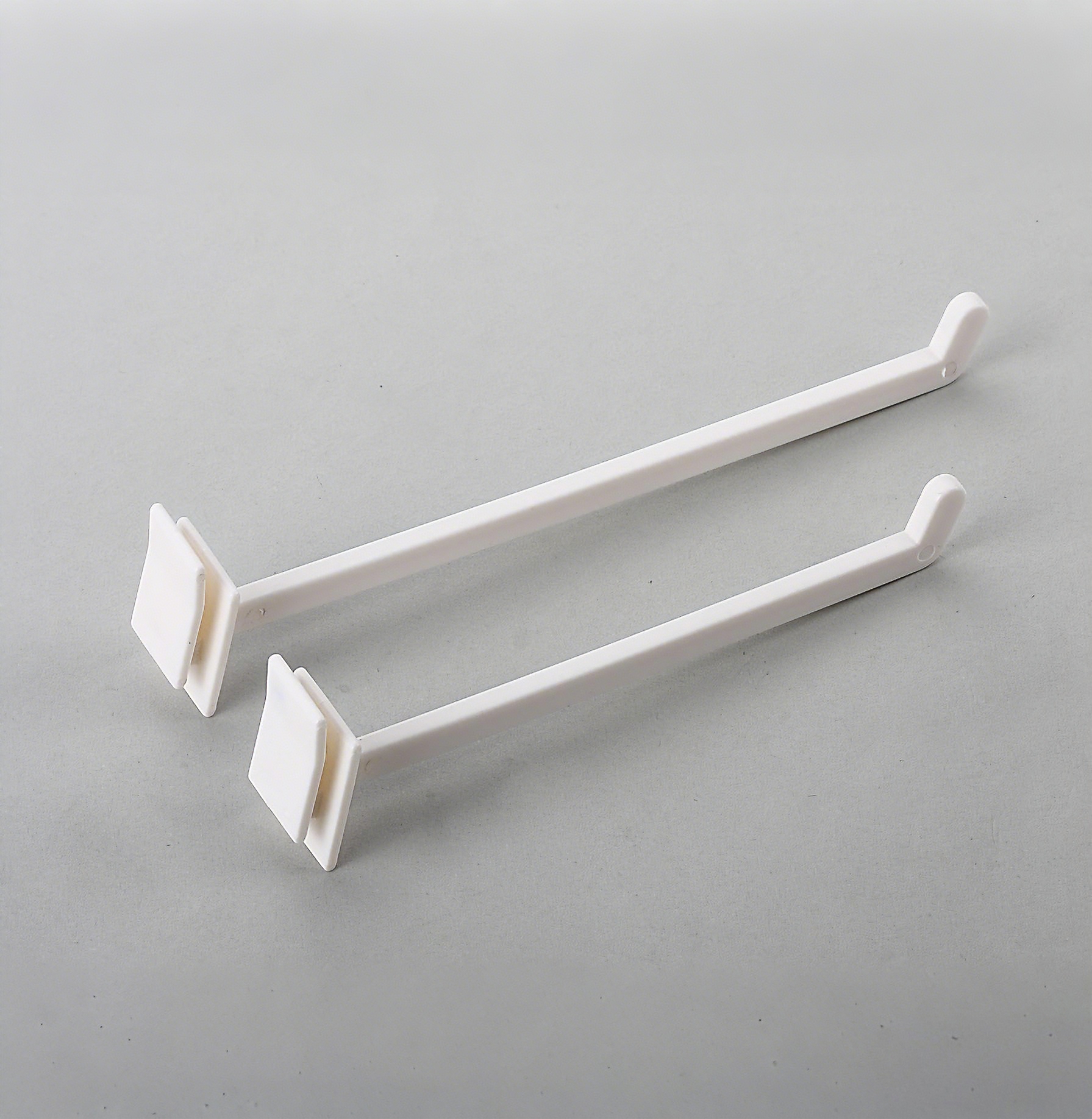

When installing pegboard hooks, the standard spacing is 1 inch (25.4 mm) on center. Standard pegboard panels are manufactured with a uniform 1-inch hole grid. However, the ideal spacing between your hooks depends heavily on the size, weight, and shape of the items you plan to display or store.
Key Takeaways
- The standard pegboard grid features holes spaced 1 inch apart.
- For small items, hooks can be placed in adjacent holes (1 inch apart).
- For large or heavy tools, space hooks 2, 4, or more inches apart to distribute weight and allow clearance.
- Always ensure there is at least 3/4 inch of clearance behind the board for the hooks to lock securely.
Standard Pegboard Hook Spacing: The 1-Inch Grid
Understanding Hole Centers vs. Pegboard Hook Spacing
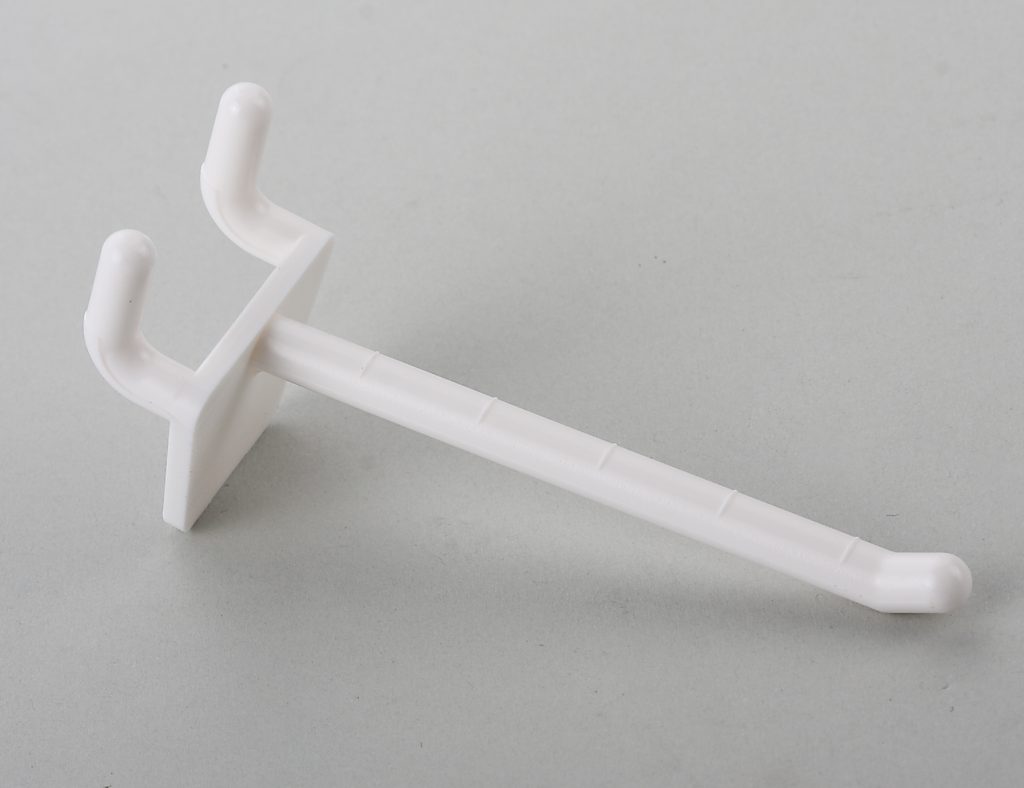
The physical layout of the board dictates your baseline. Standard pegboard uses a 1-inch (25.4 mm) grid, meaning the distance from the center of one hole to the center of the next adjacent hole is exactly 1 inch. Standard hole diameters are typically 1/8 inch (for light-duty) or 1/4 inch (for heavier applications).
Because the grid is fixed, you cannot place a hook at 1/2 inch or 3/4 inch intervals unless the board is custom-drilled. Your spacing options are limited to multiples of the 1-inch grid.
Minimum Clearance Between Items
Regardless of the grid, you need physical space between the products themselves. A good rule of thumb is to leave at least 1 inch of space between the outer edges of the items hanging on the board. If items are hung too close together, they will bump into each other, making it difficult for customers or workers to grab them, and increasing the risk of scratches or damage.
How to Adjust Pegboard Hook Spacing for Different Items
Spacing Pegboard Hooks for Small Items
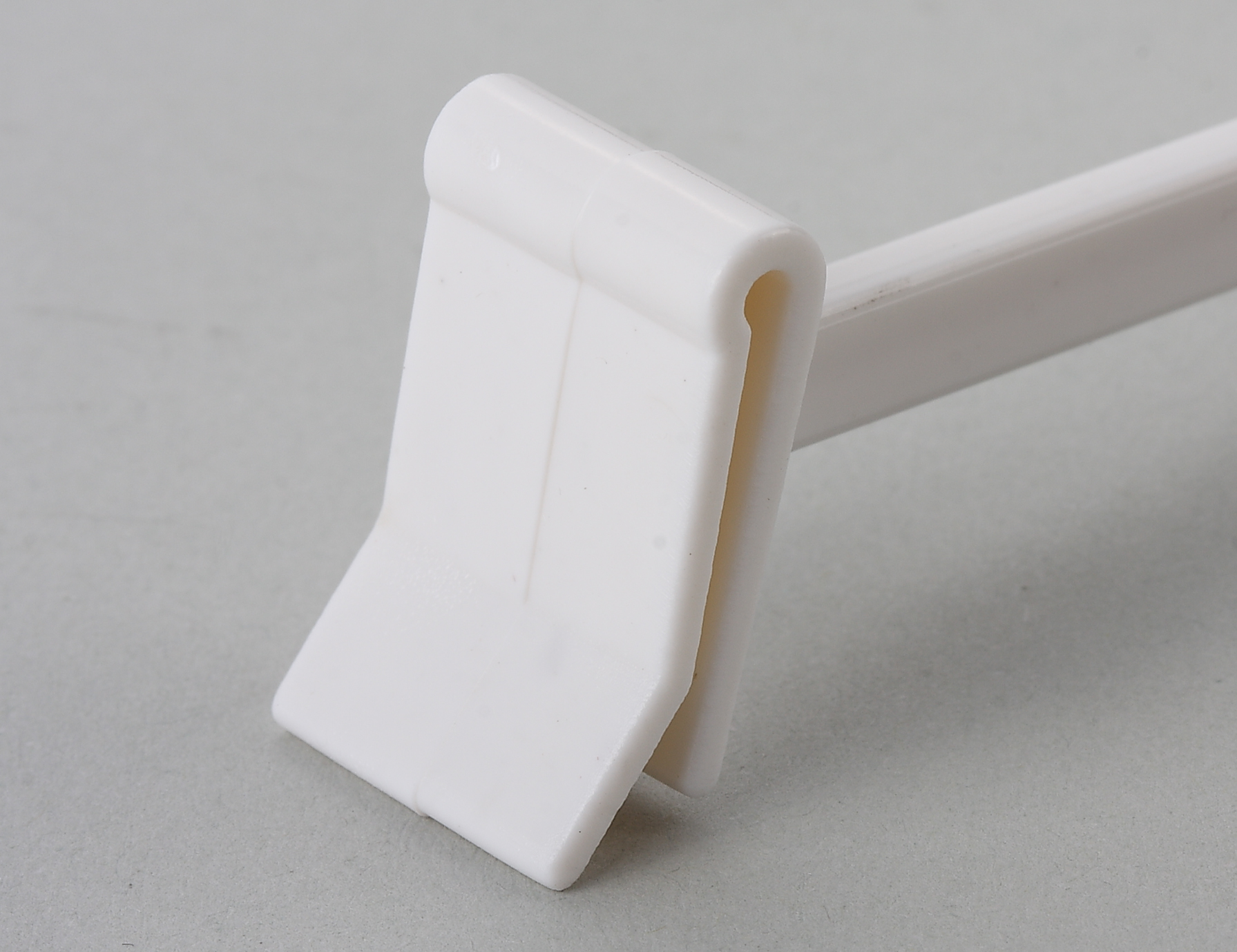
For lightweight merchandise, small tools, or accessories, you can maximize your display space by using adjacent holes. Placing the hooks 1 inch apart is perfectly acceptable here. This allows you to utilize the board efficiently, displaying a high density of small packaged goods without wasting space. If you are using this setup for retail, pairing the hooks with a clip-on shelf label holder keeps prices visible without cluttering the display.
Spacing Pegboard Hooks for Heavy Tools
When hanging heavier items—like wrenches, power tools, or bulkier retail products—you must skip holes. If the item is wide or heavy, space the hooks 2, 4, or even 6 inches apart. This serves two purposes:
- Weight Distribution: Spreading the hooks across a wider area distributes the load across multiple points, reducing the risk of the board tearing or sagging.
- Physical Clearance: It accommodates the actual width of the tool, preventing items from overlapping.
If the weight of your tools exceeds the capacity of a standard pegboard, it is safer to upgrade to a modular wall system using heavy-duty slatwall hooks for better weight distribution.
Why Pegboard Hook Spacing Affects Load Capacity
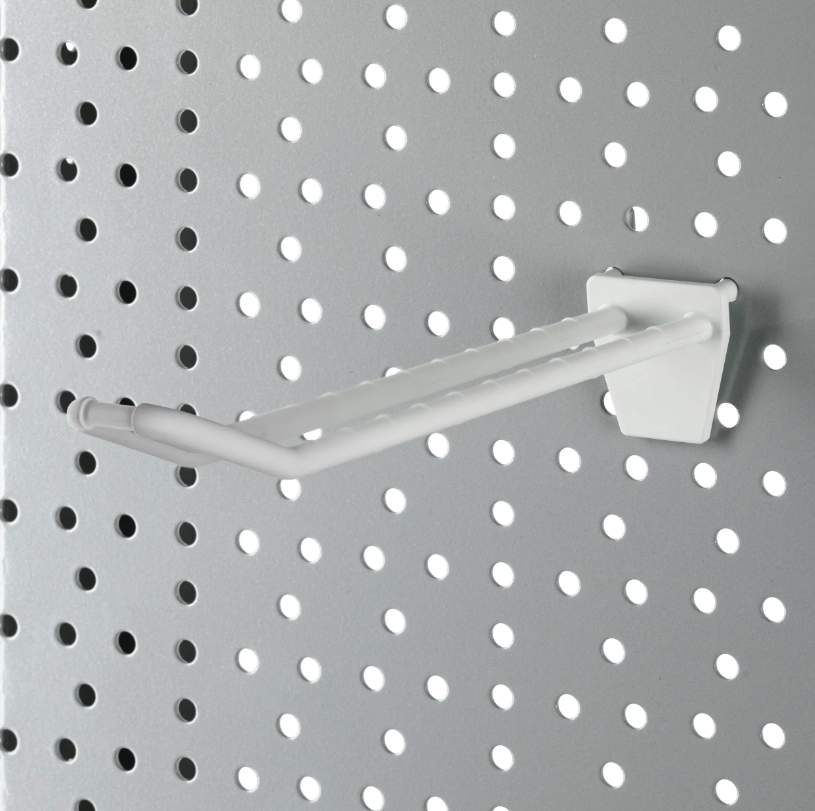
Distributing Weight Across the Panel
The spacing of your pegboard hooks directly impacts the structural integrity of the board. When you concentrate heavy hooks close together (e.g., 1 inch apart), you create localized stress. The holes can ovalize, crack, or tear out under the weight.
By spacing the hooks further apart, you transfer the load to a wider section of the panel. If you need to display multiple heavy items in a small area, consider using thicker 1/4-inch pegboard or mounting adhesive sign holders directly to the wall above the board to avoid adding extra weight to the panel.
Wall Clearance and Hook Insertion
Spacing isn’t just about horizontal distance; it also applies to the depth behind the board. Pegboard hooks require space to angle into the hole and lock into place. You must mount the pegboard with furring strips or standoffs that provide at least 3/4 inch of clearance behind the board. Without this depth clearance, the hooks will not seat properly, and they will fall out when weight is applied.
FAQ
Can I place pegboard hooks in every hole?
Yes, you can physically insert a hook into every single hole. However, for retail displays or organized workshops, this is usually a bad idea. It wastes space, makes the board look cluttered, and makes it difficult to remove items without knocking into neighboring products.
How do I stop heavy tools from touching each other?
Measure the widest part of the tool. Then, skip the necessary number of holes so there is at least 1 to 2 inches of empty space between the hanging items. If a tool is 4 inches wide, space the hooks at least 5 to 6 inches apart.
Does the length of the pegboard hook affect the spacing?
Indirectly, yes. A longer hook projects further out from the wall. If you hang heavy items on long hooks placed close together, the leverage (torque) on the pegboard holes increases. When using long hooks, it is safer to space them further apart to prevent the board from bowing outward. For a full range of standard and heavy-duty options, explore our plastic hooks to match your display requirements.