
Labels indicating the price of merchandise are known as “price label.” You can find price labels in every store; they inform you of the cost of each item, thereby helping you decide what to purchase. The function of a price tag extends beyond merely displaying a number; it also influences your perception of a product’s quality and value. Research indicates that price tags assist consumers in making purchasing decisions and foster a sense of trust in the products.
Key Takeaways
- Price tags display the cost of goods, helping you decide which items to purchase. They come in a wide variety of forms, with different types of tags offering unique benefits to both consumers and merchants. Clear and legible price tags help build your trust in the merchant and contribute to your satisfaction with the products you buy. Furthermore, promotional offers and discount information displayed on tags can often sway your purchasing decisions—even prompting you to buy items you had not originally planned to acquire.
Price Tag Definition
What Is a Price Tag?
In the retail industry, this is commonly referred to as a “price tag.” The price tag typically displays the “list price”—that is, the selling price for the item suggested by the manufacturer—which some also refer to as the “Manufacturer’s Suggested Retail Price,” “Suggested Retail Price,” or “Recommended Retail Price.”
Types of Price Tags
You find many types of tags in stores. Each type has a special use. Here is a table that shows the main types and what makes them different:
| Type of Price Tag | Description |
|---|---|
| Traditional Paper Price Tags | Businesses use these to display prices on products. |
| Removable Self-Adhesive Sticker Tags | These let you change prices easily and remove them without leaving marks. |
| Digital Price Tags | These allow stores to change prices quickly and show more information. |
Digital price tags help stores ensure that pricing is accurate and updated in real time. They enable merchants to easily adjust prices to align with promotional campaigns or new product arrivals, while also saving time for staff and reducing operational errors. The information displayed on digital price tags extends far beyond just the price—they can also provide detailed product information, such as specific features or special offers. This helps you make better choices when shopping.
Price Tag Importance
Pricing Transparency
Research indicates that transparent pricing can enhance your sense of well-being. When prices are clearly displayed, you feel that you are being treated fairly; consequently, you develop greater trust in the retailer and derive more enjoyment from the shopping experience.
Note: The internet makes price comparison effortless. You can simultaneously compare product prices across both physical retail stores and online shops, helping you feel confident in your purchasing decisions.
If you encounter a high price tag on a premium product, you will often subconsciously assume that its quality is superior. Major luxury brands leverage this very strategy to demonstrate the exceptional value of their products to consumers.
Consumer Trust
Naturally, you want to be able to trust the stores you patronize, and accurate price tags play a key role in building that trust. You feel a sense of security and peace of mind when you discover that the price displayed on the shelf matches the price charged at checkout exactly. Conversely, if there is a discrepancy in pricing, you may feel dissatisfied—or even lose your trust in the store entirely. The accuracy and consistency of price labeling are crucial to your purchasing decisions; should you encounter a pricing discrepancy, you are highly likely to choose to take your business elsewhere.
Therefore, accurate pricing enables you to clearly perceive the true value of products—as well as any available promotions—thereby strengthening your sense of trust in the brand.
Legal Requirements
Compliance with pricing regulations is paramount. Merchants must strictly adhere to the regulations regarding price tags and ensure that the price at checkout matches the price displayed on the data strips. This helps foster consumer trust and effectively prevents legal disputes. In the United States and the European Union, laws are designed to protect consumers from unfair pricing practices; retailers who fail to comply with these regulations face substantial fines and potential reputational damage.
Although there is currently no single federal law specifically addressing pricing errors, the U.S. Federal Trade Commission (FTC) actively monitors and takes enforcement action against fraudulent practices such as false advertising and “bait-and-switch” schemes. Furthermore, many states have specific statutes requiring merchants to honor their advertised lowest prices and to ensure that the price displayed on the shelf precisely matches the price charged at the register.
The table below outlines some of the potential penalties for violating price labeling regulations:
| State | Penalty Type | Amount/Details |
|---|---|---|
| New Jersey | Fine per incorrectly marked | Up to $100 per item |
| North Carolina | Fine per violation | Up to $5,000 |
| Michigan | Refund requirement | 10x bonus on overcharge |
| Canada | Free item rule | Free item up to $10 on overcharges |
It is evident, therefore, that for merchants, strict adherence to regulations regarding price labeling is of paramount importance. Should errors occur, merchants risk not only financial loss but also the erosion of customer trust. Today, thanks to the assistance of emerging technologies—such as Artificial Intelligence (AI) and Optical Character Recognition (OCR)—merchants are able to ensure the accuracy of pricing information far more effectively, thereby preventing the occurrence of various errors.
Tip: When shopping, please make it a habit to verify price labels. If you discover any pricing errors, please inform the merchant immediately and request that they be corrected. This is an effective way to safeguard your legitimate rights and interests as a consumer.
Tag Influence on Buying
Psychological Impact
The moment your gaze falls upon a price label, your brain instinctively activates a comparison mechanism, cross-referencing that price against those of similar products. This process assists you in determining whether the item offers good value; furthermore, it subtly yet profoundly shapes your overall perception and evaluation of the product.
You may have noticed that prices ending in “.99” often appear to be cheaper than whole-number prices. This phenomenon is known as the “Left-Digit Effect.” For instance, when you see a price tag of $19.99, you might perceive it as being significantly cheaper than $20.00. Furthermore, the very first price you encounter often establishes a perceptual benchmark—or “anchor”—for the item’s value. Consequently, if you initially see a high price, any subsequent, slightly lower prices will appear to be particularly good bargains.
As a result, businesses frequently employ pricing strategies that set prices just below a round number, thereby effectively boosting sales volume.
This psychological effect arises because, when you have limited knowledge about a specific product, you often rely on its price as a key indicator for judging its inherent value and quality.
Impulse Purchases
Price tags often entice you to purchase items you had no intention of buying. Retailers typically use eye-catching signage and special offers to grab your attention. This can trigger an urge to buy—even if you do not actually need the product.
- Merchants often strategically place items that are prone to impulse buying in areas where customers are waiting.
- They employ phrases such as “Limited-Time Offer” to prompt you to take immediate action.
- Seeing product samples or live demonstrations often heightens your desire to make a purchase.
- Promotional offers—such as “Buy One, Get One Free”—often encourage you to increase your spending.
As you stroll through a store, price tags are visible everywhere you look. Seeing product prices laid out before you can often fill you with excitement at the prospect of finding a “bargain.” In such a scenario, you may find yourself tossing items into your shopping cart, one after another, without any prior plan.
Promotions and Discounts
Promotional price tags can transform the way you shop. When you spot a discount, you often feel as though you are getting a great bargain. This psychological effect serves as a powerful catalyst for sales growth, particularly during major promotional events. Merchants strategically employ these promotional tactics to attract new customers and significantly boost sales performance over the short term.
Discounts and product bundles can encourage you to try out new products. If you notice a new item being offered at a special introductory price, you might be inclined to switch away from your usual brands and opt for this new product instead. Short-term price reduction strategies often prompt consumers to make purchasing decisions quickly.
Tip: Always check for special offers and compare prices. This helps you make smart choices and enjoy your shopping experience.
FAQ
What information does a price tag usually show?
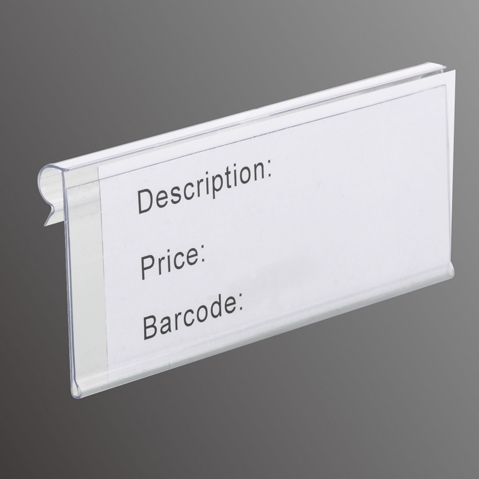
A price tag usually shows the cost of the item. You may also see the product name, barcode, or a short description. Some tags include special offers or discounts.
Why do stores use digital price tags?
You see digital price tags in many stores because they help workers update prices quickly. These tags also show extra details, like product features or reviews, making shopping easier for you.
How does a price tag affect your view of quality?
You often judge quality by looking at the price tag. A higher price can make you think a product, like GONGGONG Braided Hose, is stronger or more reliable.
What should you do if a price tag and checkout price do not match?
Always ask a store worker to check the price. You have the right to pay the price shown on the tag in most places.